


.svg.png)


***The views and theories presented in this article are those of Jason Reza Jorjani and do not necessarily reflect the opinions or endorsements of the author or Reylo Media.***

What if human history isn't a straightforward journey from caves to cities? Imagine the haunting mysteries of cosmic events and the possibilities of encounters with alien intelligences. Picture philosophers challenging entrenched beliefs, while leaders combat invisible forces, and individuals unearth hidden truths. While the mainstream view of history is rooted in concrete evidence and linear progress, this article invites you to engage with a speculative, alternative history. Could our origins reflect a ceaseless battle for freedom, with both past and future continuously reshaped by defiance and discovery? Jason Reza Jorjani's spectral vision promises to reveal how these strange, elusive events fit into the grander narrative of human history.
These bold ideas are central to Jason Reza Jorjani's "spectral" vision, which reinterprets human history using ancient myths, parapsychology, and futuristic philosophy. First, we will define "spectral reality," which refers to the hidden, multidimensional sides of history and existence. Next, we will examine "Prometheism," a philosophy of human rebellion and change. Finally, we will meet the "non-human intelligences," beings that might shape our reality. Each idea will be explained simply, with examples, so anyone can follow this new take on our origins.
This article will take you through Jorjani’s main argument: a different timeline for human origins based on his key ideas. We’ll look at important periods, like Zarathustra’s era and the Achaemenid Empire, and discuss their philosophical and cultural impact. We’ll also connect these ideas to today’s issues, such as AI ethics and global challenges, to encourage thoughtful discussion. If you’re ready to see history from a new angle, let’s get started.Who Is Jason Reza Jorjani? A Philosopher Bridging Worlds
To understand Jason Reza Jorjani’s perspective, it is important to consider his background. He is a philosopher influenced by a blend of cultures, his academic work, and a tendency to question established norms. Born in Manhattan, New York City, on February 21, 1981, Jorjani grew up in a culturally diverse environment that shaped his outlook. His father was an Iranian immigrant with roots in the Qajar dynasty (Persia’s rulers from 1789 to 1925). This heritage contributed to his awareness of Middle Eastern history, philosophy, and mysticism. From an early age, Jorjani heard accounts about Persian figures such as Cyrus the Great and poets like Ferdowsi (author of the Shahnameh), as well as teachings from Zoroastrian sages. These influences led to an appreciation for Iran’s philosophical traditions and their historical opposition to oppressive forces.
His mother, who had Irish and Scandinavian roots, grounded him in Western traditions such as rational inquiry, skepticism, and a love for literature from Shakespeare to modern novels. Growing up in New York’s diverse environment and attending elite schools, Jorjani was exposed to a range of perspectives. He read Persian epics alongside Greek classics, explored Eastern spirituality while studying Western science, and debated philosophical questions with classmates from different backgrounds. This experience of both Eastern and Western, mysticism and reason, shaped his perspective, combining appreciation for Persian literature with engagement in Western philosophy.
His academic path reflects this fusion. After a year at Fordham University, Jorjani transferred to NYU. He earned a Bachelor’s and Master’s in Philosophy. At NYU, he engaged deeply with Friedrich Nietzsche, whose “Übermensch” inspired Jorjani’s vision of transcending human limitations. He also studied Martin Heidegger, who warned of technology’s dehumanizing risks. Professors noted his knack for synthesizing complex ideas. He often connected Nietzsche’s will-to-power with Persian themes of cosmic struggle.
In 2013, Jorjani completed his PhD at Stony Brook University on Long Island. His focus was on the intersection of philosophy, science, culture, and history. His dissertation explored how human consciousness interacts with reality. He drew on Nietzsche’s ideas of creative will and Heidegger’s critique of modernity’s mechanistic worldview. From 2014 to 2017, he taught at the New Jersey Institute of Technology (NJIT). He led courses on science, technology, society, Iranian history, comparative religion, ethics, and Heidegger’s philosophy. Students describe his lectures as electrifying. They were less about rote learning and more about sparking existential questions. One student recalled: "He’d challenge us to imagine history as a story rewritten by unseen authors, like a cosmic editor tampering with our past. It was mind-bending, like waking up from a dream."
Jorjani has authored multiple books that challenge conventional perspectives. His work Prometheus and Atlas (2016) won the Parapsychological Association Book Award. It addressed philosophy and the study of alleged psychic phenomena, such as telepathy, precognition, and psychokinesis. He proposes that reality is “spectral.” This means reality is a multidimensional context in which reports of so-called paranormal events suggest possible alternate understandings of existence. Other notable works include Iranian Leviathan (2019), which interprets Persian history through a non-mainstream lens; Closer Encounters (2021), on UFOs and alien involvement; World State of Emergency (2017), discussing global issues; Lovers of Sophia (2017), a philosophical collection; and recent titles like Philosophy of the Future and Satanaeon (2024). These books are positioned as manifestos. They aim to blend analysis with speculation and invite readers to question prevailing worldviews.
Controversy has been a constant companion. In 2016, Jorjani became editor-in-chief of Arktos Media, a publisher associated with the European New Right. This movement critiques globalization and emphasizes cultural identity. He co-founded the AltRight Corporation with Richard Spencer. Their aim was to unite 'Indo-European' civilizations,ancient peoples with shared linguistic and cultural roots from Europe to Iran and India. His vision was philosophical. It was rooted in cultural unity and Promethean evolution, not racial exclusivity. Still, the association drew intense criticism. In September 2017, a covertly recorded video by a Swedish antifascist activist posing as a student surfaced. It showed Jorjani discussing dystopian futures, including fascist resurgences and concentration camps. He claimed his words were taken out of context. He said they were meant as warnings about potential futures, not endorsements. The damage was done. NJIT suspended him, and his contract was not renewed. Jorjani filed a $25 million lawsuit in 2018, alleging free speech violations and defamation. Key claims were dismissed in 2019.

To navigate Jorjani's multifaceted career and philosophical contributions, it is important for readers to distinguish between his ideas and political associations. While his philosophical visions explore speculative possibilities and human potential, these ideas should be engaged with critically and independently from the controversies surrounding his political affiliations. This approach encourages thoughtful discourse and a comprehensive understanding of his work.
He resigned from the AltRight Corporation in August 2017. Jorjani called it a “miscarriage” and “total failure” and distanced himself from white nationalism. He focused instead on the Iranian Renaissance Organization, a cultural nonprofit that advocates for a secular, modern Iran rooted in its ancient heritage. Jorjani also claims involvement in a 2017–2019 plot with private intelligence firm Jellyfish to orchestrate regime changes. This included a nationalist coup in Iran to transition from the Islamic Republic to a secular state honoring Persian roots. He alleges connections to figures like Steve Bannon (who was unaware, per Jorjani), but the plot collapsed. Associates faced legal troubles. These claims are detailed in posts on X and his books. They remain unverified but reflect his willingness to engage with high-stakes ideas.
Critics, especially on forums such as Reddit’s r/askphilosophy, describe Jorjani as “unrespectable.” They cite his political associations, online activity, and focus on unconventional topics including occultism, Satanism, and parapsychology. These critics contend that his ideas lack consensus in mainstream academic circles and rely on unproven theories. Supporters, by contrast, view him as willing to investigate contested or marginalized questions about human origins and capacities. As a dual U.S.-Iranian citizen and “Philosopher in Residence” at Collagia,a platform exploring AI, digital art, and social trends,Jorjani actively lectures, writes, and shares perspectives online. His approach is characterized by a readiness to challenge prevailing views and engage with controversial debates.
Why does his background matter? His dual heritage informs his view of Iran as a philosophical crucible. He sees it blending Eastern mysticism with Western rationality. His academic training lets him critique modernity’s blind spots, from technological hubris to cultural erasure. His controversies, though divisive, show his commitment to bold ideas even at personal cost. This sets the stage for his spectral reimagining of human history. It is a vision where humanity is not a passive player but an active rebel in a cosmic drama.
Jorjani’s theories introduce several ideas that might be new, especially if you haven’t explored esoteric topics or parapsychology before. We’ll explain each concept clearly and use simple examples to make them easier to understand. These ideas are the basis of his timeline and are important for understanding his view of where we come from and our place in the universe.
“Spectral reality” is Jorjani’s term for a reality that is not fixed or linear but fluid and multidimensional, with “spectral” evoking ghosts,hidden, non-physical layers of existence that haunt our world. Unlike the conventional history taught in schools,a straight line from the Stone Age to the Space Age,Jorjani sees reality as a spider’s web: intricate, interconnected, and easily altered by a tug on a single thread. Time, in this view, is not a one-way arrow but a malleable web where past, present, and future can be edited by powerful forces, leading to phenomena like “Mandela Effects” (when many people recall history differently, such as a brand name spelled differently) or synchronicities (meaningful coincidences, like thinking of a friend and receiving their call moments later).
For example, have you ever sworn a movie quote was different from what’s on screen, like “Luke, I am your father” instead of “No, I am your father” from Star Wars? Jorjani suggests these are glitches from timeline “revisions” by non-human intelligences (NHI) or future time travelers, who can alter the past, leaving ripples in collective memory. In Prometheus and Atlas, he writes: “Reality is a spectral matrix, haunted by forces that weave and unweave our history, leaving traces in anomalies we dismiss.” This challenges materialist science, which often ignores paranormal events like hauntings, UFO sightings, or precognitive dreams, labeling them as superstition.
Analogy: Picture your life as a shared Google Doc, where someone in the future,or another dimension,can edit your past entries, and you feel subtle shifts, like a memory that doesn’t quite fit. Spectral reality means history is not set in stone but a living, editable narrative shaped by unseen hands.
Why it matters: This idea invites us to question set stories about history, just as we might question old business models in a changing world. For professionals, it is a reminder to stay flexible and curious, looking for deeper truths in history, science, or even in how organizations work.
The Trickster archetype is found across cultures: Loki in Norse mythology, Coyote in Native American tales, Anansi the spider in African stories, or Eshu in Yoruba lore. Jorjani calls it “Aion” or the “Spinner,” a universal force (a psychological pattern, per Carl Jung) that manipulates reality through chaos, illusions, or unexpected interventions. It is not inherently malevolent, but unpredictable, like a cosmic prankster testing humanity’s resilience, pushing us to evolve, or sometimes ensnaring us in confusion. It might manifest as UFO sightings, unexplained coincidences, or historical anomalies that jolt us awake from complacency.
For instance, a wave of UFO sightings in a small town, sparking public debate, could be a Trickster “test,” challenging our perception of reality. In Closer Encounters, Jorjani writes: “The Trickster weaves synchronicities to disrupt our linear illusions, revealing the spectral web beneath.” It might orchestrate cataclysms, like floods or wars, or revelations, like scientific breakthroughs, to steer humanity’s path, but its motives,freedom or control,remain ambiguous.
Analogy: Think of a dungeon master in a role-playing game like Dungeons & Dragons, adding unexpected plot twists to challenge players. The Trickster keeps humanity on its toes, forcing us to adapt, but its ultimate agenda is a mystery, like a chess master playing both sides of the board.
Why it matters: Noticing the Trickster reminds us to stay alert and question events that seem random or confusing, like sudden changes in markets or news stories. For professionals, it’s a prompt to look for patterns in times of change and to use critical thinking when facing uncertainty.
“Prometheism” is Jorjani’s core philosophy, inspired by the Greek titan Prometheus, who stole fire from the gods to empower humans, symbolizing knowledge, technology, and independence. Punished by Zeus,chained to a rock, his liver eaten daily,Prometheus represents defiance against oppressive powers, whether divine, political, or cosmic. Jorjani urges humanity to “steal fire” again, using science, artificial intelligence (AI), and psi (psychic) abilities to evolve into god-like beings, breaking free from control by oppressive forces. The risk is hubris,overreaching could invite punishment, as in ancient myths, but the reward is transcendence.
In The Prometheist Manifesto, Jorjani writes: “Prometheus is the archetype of humanity’s rebellion, freeing us from scarcity, ignorance, and enslaving gods.” He applies this to modern crises, viewing events like the COVID-19 pandemic as potential bio-weapons from labs (e.g., Wuhan), warning of technological hubris if not guided by ethical vision. Prometheism is not just about innovation but about reclaiming our agency to shape reality, defying those who would keep us ignorant or submissive.
Analogy: Like entrepreneurs disrupting monopolistic industries with innovative apps or platforms, Prometheism is a cosmic startup, challenging oppressive systems,whether ancient gods, modern governments, or unchecked algorithms. It’s about taking risks to unlock humanity’s potential, knowing the stakes are high.
Why it matters: For professionals, Prometheism encourages bold and ethical innovation,like building AI that helps people instead of controlling them, or creating teams where everyone can contribute. It’s a reminder to balance big goals with responsibility, and to avoid the mistakes that come from putting profit ahead of ethics.
Jorjani’s concept of “non-human intelligences” (NHI) redefines aliens not as green men in spaceships but as interdimensional or time-traveling beings who have shaped human history from the shadows. Ancient gods,Yahweh of the Bible, Allah of Islam, the Anunnaki of Sumerian myths,are, in his view, NHI disguises, using religions and myths as control mechanisms to enforce a kind of “historical amnesia” that keeps humanity ignorant of its true origins and potential. Evidence? Jorjani points to UFO encounters, ancient texts describing “sky gods” or advanced beings, and out-of-place artifacts (OOPARTs), like modern objects found in ancient geological strata, which he sees as leaks from altered timelines.
In Closer Encounters, he argues: “Yahweh and Allah are space aliens who enslaved believers, orchestrating genocides and dogmas to maintain control.” For example, Sumerian tablets describe Anunnaki creating humans to mine gold, which Jorjani interprets as genetic engineering by NHI. UFO sightings, from ancient “chariots of fire” to modern UAP reports, are their interventions, manipulating events or testing humanity’s awareness.
Analogy: Imagine NHI as hackers controlling a global computer network, programming human behavior through myths, religions, or orchestrated events, keeping us unaware of the code running our world. Their goal? To maintain power, preventing us from hacking back and reclaiming our autonomy.
Why it matters: This view encourages us to question all forms of authority, whether religious, political, or technological, and to look for the real story behind what we’re told. For professionals, it’s similar to checking a company’s records to find hidden motives, ensuring choices support people instead of external control.
Psi Concepts: Mind-to-mind communication (telepathy), psychokinesis (the ability to move objects with the mind), precognition (seeing the future), and clairvoyance (remote viewing) are central to Jorjani’s vision. He argues that ancient civilizations, like Atlantis or Egypt, used psi to achieve feats beyond known technology, such as levitating stones for pyramids or coordinating battles through telepathy. Modern science often dismisses psi as pseudoscience, but Jorjani sees it as key to unlocking human potential, which he believes has been suppressed by NHI to keep humanity docile.
In Prometheus and Atlas, he calls for a “postmodern science” that blends psi with technology, deconstructing the divide between mind and matter. For example, he suggests Atlanteans used psychokinesis to build megaliths, a skill we could rediscover to revolutionize fields like engineering or medicine. Recent experiments, like those in remote viewing (e.g., Stanford Research Institute’s 1970s studies), hint at psi’s reality, though mainstream academia remains skeptical.
Analogy: Psi is like an unused app on your smartphone,potentially transformative, but you need the manual to unlock its features. Rediscovering psi could be like finding a new toolset for humanity, enabling breakthroughs in communication, creativity, or even space exploration.
Why it matters: For professionals, being open to unusual ideas like psi can lead to new ways of thinking, such as using intuition in design or leadership. It’s an invitation to look beyond strict scientific rules, just as early adopters of new technology often get ahead in their fields.
Jorjani’s Spectral Timeline: A Cosmic Reimagining of Human History
This article will focus on several key epochs that highlight Jorjani's vision of human history as an interplay between forces of cosmic manipulation and human resistance. We will explore in depth the following eras: the Achaemenid Empire, which exemplifies the blend of esoteric knowledge with governance; the Sasanian period, where state orthodoxy and gnostic resistance collided; and the modern era, marking humanity’s potential awakening from cosmic amnesia. Each of these periods reveals how humanity has navigated the tension between control and liberation. For a complete understanding of the entire spectrum of historical epochs, the detailed analysis of additional eras can be found in the appendix.
Jorjani, drawing on physicist John Brandenburg’s analysis of xenon-129 isotopes in Mars’ atmosphere (suggesting nuclear explosions), envisions a hyper-advanced Martian civilization thriving millions of years ago. Picture a red planet bustling with gleaming cities, their spires towering into a dusty sky, where beings,possibly humanoid or NHI,communicate via telepathy and wield anti-gravity technology to build vast complexes. This civilization, perhaps driven by ideological conflicts or resource scarcity, descended into a catastrophic nuclear war, turning Mars into a desolate wasteland. Skies burned red, atmospheres choked with radiation, and survivors fled in advanced spacecraft, seeking new worlds to inhabit.
In Closer Encounters, Jorjani writes: “Mars bears the scars of a nuclear apocalypse, a warning of what advanced societies risk when hubris overtakes wisdom.” Brandenburg’s evidence includes isotopic anomalies and eroded structures like the “Face on Mars” in Cydonia, which some interpret as artificial ruins. Jorjani speculates these Martians, possibly our ancestors or NHI allies, influenced early Earth, seeding life or technologies that would shape human evolution.
Cultural context: Ancient myths worldwide describe “sky people” or fallen civilizations, such as the Sumerian Anunnaki or Hindu Vimanas (flying machines). These could be distorted memories of Martian refugees, encoded in oral traditions by early humans. Cave paintings in regions like Mesopotamia, depicting star maps or celestial beings, may hint at contact with these survivors, whose advanced knowledge left traces in human culture.
Mechanics: The Martian war’s fallout disrupted ecosystems, forcing survivors to use psi-enhanced precognition to plan their escape. Jorjani suggests they targeted Earth, a planet ripe for life, using advanced navigation to cross the void. The Trickster Aion may have orchestrated this cataclysm as a cosmic test, pruning one civilization to seed another, with Mars’ ruins serving as a spectral warning embedded in the web of time.
Modern tie: NASA’s Mars rovers, like Perseverance, search for signs of ancient life, potentially validating Jorjani’s claims if microbial or artificial traces are found. SpaceX’s colonization plans, led by Elon Musk, reflect a Promethean ambition to reclaim Mars, but Jorjani warns of repeating Martian hubris,technological overreach without ethical grounding. For professionals, this is a call to balance innovation with caution, ensuring space exploration respects cosmic lessons.
Impact: This period establishes a cosmic precedent: advanced societies can rise and fall, but their survivors plant seeds elsewhere, shaping new worlds. It challenges us to consider our place in a larger cosmic narrative, urging ethical stewardship of technology, whether in space exploration or AI development.
Martian refugees, arriving on Earth millions of years ago, construct the Moon as a hollow, artificial base to monitor or control the planet’s development. Jorjani cites NASA’s Apollo mission seismic data, where the Moon “rang like a bell” when struck, suggesting an unnatural, possibly hollow structure. Its purpose? Surveillance of Earth’s life, amplification of psychic control, or even “soul harvesting”,trapping human energies after death, a concept rooted in esoteric traditions. The Moon influences tides, human behavior (e.g., lunar cycles linked to myths of madness), and astrological systems, which Jorjani sees as tools of NHI manipulation to enforce fatalism, the belief that our fates are written in the stars.
Scene: Imagine a fleet of Martian craft orbiting a young Earth, their engineers using psi abilities to manipulate matter, assembling a massive, hollow sphere embedded with advanced technology. A leader gazes at the blue planet below, declaring: “This will be our watchtower, guiding their path,or binding it.” The Moon’s eerie glow begins, a silent overseer in the night sky.
Cultural context: Ancient cultures revered the Moon as a deity,Sin in Mesopotamia, Chandra in India, Artemis in Greece,hinting at its profound influence. Myths of lunar creation, like Sumerian tales of Nanna emerging from cosmic chaos, may encode its artificial origin. Temples dedicated to lunar gods, often aligned with celestial events, suggest early humans sensed its power, perhaps through psi sensitivity to its psychic emissions.
Mechanics: The Moon’s construction involved psi-enhanced technology, possibly psychokinesis to move massive materials or telepathy to coordinate efforts. Its role as a psychic amplifier, per Jorjani, broadcasts NHI agendas, like astrological determinism, which convinces humans their destinies are fixed. The Trickster Aion uses the Moon to weave synchronicities, reinforcing control, while its hollow structure may house NHI tech, monitoring Earth or harvesting energies, as suggested in occult texts like the Necronomicon myths.
Modern tie: NASA’s Artemis program, aiming to return humans to the Moon, could uncover anomalies like unusual seismic patterns, fueling speculation about its origins. Conspiracy theories about a hollow Moon, popular on platforms like X, echo Jorjani’s ideas, urging us to question official narratives. For professionals, this parallels auditing systems,whether corporate or technological,for hidden influences, ensuring transparency in projects like space exploration or AI governance.
Impact: The Moon as an NHI control device establishes a recurring theme in Jorjani’s timeline: humanity’s struggle against unseen manipulators. It challenges us to reclaim agency, resisting deterministic beliefs, whether from ancient astrology or modern algorithms that predict behavior.

The Chicxulub asteroid impact (~66 million years ago), which ended the dinosaur era, was not a random cosmic event but an NHI-directed intervention, per Jorjani. This cataclysm,marked by a massive crater in Yucatán, Mexico,cleared the way for mammals, paving the path for human-like intelligence. Picture a fiery sky streaked with meteors, oceans rising in colossal tsunamis, and ash clouds plunging Earth into darkness, wiping out towering reptiles in a geological instant.
Jorjani writes in Closer Encounters: “Extinctions are not accidents but spectral interventions, reshaping life’s trajectory.” He suggests NHI, possibly Martian survivors or Anunnaki, guided the asteroid,perhaps as collateral from cosmic wars or a deliberate reset to favor mammals. The Trickster Aion may have orchestrated this, testing evolutionary paths, with Earth as a laboratory for new forms of intelligence.
Cultural context: Myths of cosmic battles, like the Sumerian Enuma Elish (Tiamat vs. Marduk) or Hindu tales of celestial destruction, may encode this event, with dinosaurs as collateral in NHI conflicts. Ancient rock art depicting fiery skies or monstrous beasts could reflect survivor memories, passed down through oral traditions.
Mechanics: NHI used advanced technology, like asteroid redirection, to trigger the impact, with the Moon amplifying environmental effects (e.g., tidal disruptions). Psi-enhanced foresight ensured mammals survived the aftermath, perhaps through genetic tweaks or sheltered enclaves. Jorjani posits the asteroid was a spectral act, editing Earth’s timeline to align with NHI goals, possibly to create a species (humans) suited for their agendas.
Modern tie: NASA’s DART mission, which successfully redirected an asteroid in 2022, demonstrates humanity’s growing ability to manipulate cosmic events, mirroring NHI capabilities. This raises ethical questions: Should we play “god” with planetary systems? For professionals, it’s a reminder to weigh the consequences of technologies like geoengineering, ensuring they serve humanity, not unseen agendas.
Impact: This reset shows NHI’s power to shape history, setting the stage for human emergence. It urges us to consider our role as stewards of Earth, avoiding hubris in our technological ambitions.

Sumerian myths describe the Anunnaki, “gods” from the heavens, creating humans as slaves to mine gold, a resource possibly needed for their technology or survival. Jorjani sees them as NHI, not deities, who engineered early hominids through genetic manipulation, blending alien DNA with terrestrial primates to create Homo sapiens. Out-of-place artifacts (OOPARTs), like gold chains found in Carboniferous coal (300 million years old), are, in his view, leaks from timeline edits by NHI or future humans, evidence of a reality rewritten.
Scene: In ancient mines under a scorching Mesopotamian sun, Anunnaki overseers direct proto-humans, their DNA spliced with alien codes to enhance intelligence and obedience. Enki, a Promethean figure among the Anunnaki, defies orders, whispering forbidden knowledge to a human: “You are more than slaves; you can become gods.” The seeds of rebellion are sown.
Cultural context: Sumerian tablets, like the Enuma Elish, describe human creation by Anunnaki, with gold as a divine resource, possibly reflecting NHI needs. Similar myths appear in cultures worldwide,Egyptian gods shaping humans from clay, or Mesoamerican tales of feathered serpents,suggesting a shared memory of external intervention. Gold’s universal value in ancient societies may stem from this ancient mandate.
Mechanics: Genetic engineering explains rapid human evolution, like the sudden leap in brain size ~200,000 years ago. Psi abilities in early humans, per Jorjani, aided survival, with telepathy fostering cooperation and precognition evading predators. The Trickster Aion, through timeline edits, left OOPARTs as anomalies, challenging linear history. Enki’s rebellion, granting humans self-awareness, mirrors Prometheus, sparking a spectral struggle against NHI control.
Modern tie: CRISPR gene-editing technology echoes Anunnaki methods, raising Promethean questions: Are we liberating humanity or risking hubris? OOPARTs, often dismissed by archaeologists, fuel debates on platforms like X, urging us to question mainstream timelines. For professionals, this parallels innovation audits,ensuring new tech aligns with human freedom, not control.
Impact: Humanity’s engineered origins set the stage for a cosmic rebellion, with Enki’s gift of knowledge empowering us to challenge our creators. It’s a call to reclaim our potential, resisting manipulation in all forms.
The Younger Dryas period (~12,900–11,700 BC) marks a cataclysmic reset, erasing an advanced civilization and reshaping humanity’s path. Jorjani sees this as an NHI-orchestrated event, punishing hubris while survivors preserve spectral truths in myths and monuments.
Drawing on Plato’s Timaeus and Critias (~360 BC), Jorjani posits Atlantis as a real civilization in a temperate Antarctica, before pole shifts froze the continent. Picture a golden age of orichalcum-clad cities,shimmering red-gold metal unknown to modern science,where Atlanteans harnessed psi abilities like psychokinesis to levitate massive stones and telepathy to coordinate society. In Prometheus and Atlas, Jorjani writes: “Atlantis was the peak of human potential, blending psi with spectral knowledge to rival the gods.”
Cultural context: Plato describes Atlantis as a naval power sunk 9,000 years earlier, possibly encoding survivor tales from a pre-flood world. Ice core data from Antarctica shows a once-temperate climate, supporting the possibility of advanced settlements. Myths worldwide, from Greek tales of lost islands to Polynesian legends of sunken lands, echo Atlantis, suggesting a shared trauma preserved in oral traditions.
Mechanics: Atlanteans used psi-tech,sound waves and psychokinesis,to build megaliths, like precursors to Giza’s pyramids. Their society, per Jorjani, blended science and spirituality, with energy crystals powering cities and clairvoyance guiding governance. Hubris,misusing psi to dominate nature or challenge NHI,invited punishment, triggering the Younger Dryas cataclysm. The Trickster Aion wove this downfall, testing humanity’s balance of power and wisdom.
Scene: In an Atlantean plaza, priests focus psi energy, lifting stones for a temple as citizens communicate silently via telepathy. A leader warns: “Our power rivals the gods,beware their wrath.” The sky darkens, foreshadowing doom.
Modern tie: Satellite images of Antarctic anomalies, like possible structures under ice, fuel speculation about lost civilizations, discussed on X and in documentaries. Climate change, melting polar ice, may reveal more, echoing Jorjani’s claims. For professionals, Atlantis’s hubris warns against unchecked tech,like AI or geoengineering,urging ethical innovation.
Impact: Atlantis’s fall shows the risks of overreaching, a lesson for today’s technological ambitions. Its legacy, preserved in myths, inspires us to rediscover lost potentials, like psi or sustainable tech.
The Younger Dryas, a sudden return to ice age conditions, was triggered by comet impacts, per Jorjani,an NHI punishment for Atlantean hubris. Evidence includes geological markers (e.g., nanodiamonds in sediment) and meltwater pulses flooding coasts. Picture skies ablaze with comet fragments, mega-tsunamis swallowing cities, and Antarctica freezing as pole shifts alter Earth’s climate.
Jorjani: “The cataclysm was a spectral intervention, resetting humanity’s path.” NHI, possibly Anunnaki, directed comets to curb Atlantis’s power, with the Moon amplifying tidal disruptions. The Trickster Aion orchestrated this, erasing a golden age to enforce amnesia.
Cultural context: Global flood myths,Noah’s Ark, Persian Yima, Greek Deucalion,encode this trauma, with arks symbolizing survivor vessels. Archaeological sites like Göbekli Tepe (~9600 BC) may mark post-cataclysm rebuilding, preserving Atlantean knowledge.
Mechanics: NHI used advanced tech (e.g., asteroid redirection) to trigger impacts, with psi foresight ensuring their agenda. Survivors, guided by precognition, fled to high grounds or built arks. The Moon’s psychic influence deepened amnesia, suppressing memories of Atlantis.
Scene: As comets rain, Atlanteans board crystal-powered arks, their leaders using clairvoyance to navigate floods. A priest laments: “Our hubris called the heavens’ wrath.”
Modern tie: Climate change parallels Younger Dryas disruptions, with rising seas threatening cities. NASA’s asteroid monitoring reflects NHI-like control, raising ethical questions. Professionals can draw on this to prioritize resilience, like sustainable urban planning.
Impact: The cataclysm enforces amnesia but sparks survivor resilience, preserving truths in myths and setting the stage for rebellion.

Post-cataclysm, Anunnaki hybrids,human-NHI offspring,seed new societies in Mesopotamia, Egypt, and beyond. Enki, a Promethean figure, grants forbidden knowledge (e.g., agriculture, writing), defying NHI orders to keep humans enslaved. Jorjani: “Enki is humanity’s liberator, planting seeds of rebellion.”
Cultural context: Sumerian texts describe Enki teaching humans, mirrored in Prometheus myths or Egyptian tales of Thoth. Early agricultural sites (e.g., Çatalhöyük, ~7500 BC) suggest rapid cultural leaps, possibly from hybrid knowledge.
Mechanics: Hybrids, with enhanced DNA, spread psi abilities like telepathy, aiding cooperation. Enki’s teachings, encoded in myths, resisted NHI amnesia. The Trickster Aion tried to erase these truths, but oral traditions preserved them.
Scene: Enki instructs survivors by a river, teaching irrigation: “You are not slaves but creators.” Their minds, linked by psi, spread knowledge.
Modern tie: Ancient DNA studies reveal unexplained genetic leaps, supporting Jorjani’s claims. Biotechnology debates echo Enki’s rebellion, urging ethical innovation.
Impact: Seeds resistance, empowering humans to defy NHI control.

Survivors build megalithic sites like Giza (~10,500 BC, aligned with Leo) and Göbekli Tepe as psychic control grids, not mere monuments, amplifying elite power via the Moon’s influence. Jorjani: “Megaliths were spectral technology, binding humanity.”
Cultural context: Giza’s precision and Göbekli Tepe’s T-shaped pillars suggest advanced knowledge, defying mainstream archaeology’s timelines. Global megaliths, from Stonehenge to Easter Island, share alignments, hinting at a unified purpose.
Mechanics: Psi-tech (e.g., sound waves, psychokinesis) moved stones, with sites channeling spectral energy to control populations. NHI elites used these grids to enforce Druj, countering Asha’s liberation. The Trickster Aion embedded anomalies, like Giza’s Sphinx erosion, as timeline leaks.
Scene: At Giza, priests align stones with stars, their chants resonating with psi, linking to the Moon’s control.
Modern tie: Göbekli Tepe’s discovery challenges history, fueling X debates. For professionals, megaliths warn of control systems, like surveillance tech, urging ethical design.
Impact: Shows NHI’s lingering control, a lesson for resisting modern manipulation.
After the Younger Dryas, survivors encode Atlantean knowledge in myths, and in ancient Iran, Zarathustra (Zoroaster) emerges as the “first philosopher,” igniting a rebellion against NHI control through his revolutionary ideas.
Picture a lone figure on a windswept steppe under a blazing starry sky, composing the Gathas,poetic hymns that grapple with truth, destiny, and human potential. Jorjani calls Zarathustra the first philosopher, not a religious prophet, whose dualistic vision pits Asha (truth, progress, cosmic order) against Druj (lies, stagnation, chaos). In Iranian Leviathan, he writes: “Zarathustra articulated humanity’s role as co-creators of reality, defying enslaving gods who would chain us to false fates.”
Cultural context: In eastern Iran (modern Afghanistan, Bactria), Indo-European nomads roamed, sharing oral traditions around campfires. The Gathas, composed ~1500–1000 BC (dates debated), spread through storytelling, like viral songs in a pre-literate world. Zarathustra rejected soma cults (hallucinogenic rituals) and Anunnaki-linked violence (e.g., cattle sacrifices), seeing them as NHI tools to keep humans submissive. His teachings, emphasizing free will and rational inquiry, challenged the fatalism imposed by the Moon’s psychic influence.
Mechanics: Zarathustra’s dualism framed Asha as a clear signal of truth, guiding humanity’s evolution, while Druj was static, enforcing NHI control. He used psi abilities, like precognition, to foresee cultural shifts, crafting hymns that resisted timeline edits by the Trickster Aion. His rejection of blood sacrifices disrupted NHI energy harvesting, redirecting human focus to intellectual and spiritual growth.
Scene: By firelight, Zarathustra addresses tribes: “The gods are Druj, illusions chaining your minds. Choose Asha, forge your fate!” Elders resist, clinging to old rituals, but youth are inspired, their minds buzzing with psi-enhanced clarity.
Modern tie: Zarathustra’s call to truth mirrors resisting misinformation in today’s AI-driven media, where algorithms can amplify Druj-like falsehoods. For professionals, it’s a call to champion critical thinking, ensuring decisions,whether in tech, policy, or leadership,are grounded in evidence and ethics.
Impact: Zarathustra’s philosophy seeds rational inquiry, influencing later thinkers from Greece to India, and sets a precedent for defying cosmic control, urging humanity to reclaim its agency.
Mithra, the deity of covenants and light, embodies human potential in Zarathustra’s vision. Jorjani: “Mithra is humanity’s oath to evolve, resisting NHI oppression.” Mithraic rituals, held in open-air sanctuaries or caves, fostered egalitarian communities, countering the Moon’s fatalistic influence with psi-enhanced unity.
Cultural context: Mithraism, pre-dating its later Roman form, thrived among Indo-Iranian tribes, spreading via trade routes like the Silk Road’s precursors. Unlike hierarchical religions, it welcomed warriors, traders, and poets, emphasizing shared oaths and justice. Rituals involved star-gazing, communal meals, and chants, reflecting a pre-patriarchal ethos rooted in Atlantean communalism.
Mechanics: Mithraic initiates used psi meditation to tap telepathy, fostering collective resistance against NHI. Rituals, aligned with solstices, amplified Asha, countering Druj’s chaos. The bull-slaying motif (tauroctony), later central to Roman Mithraism, symbolized victory over NHI control, with the bull representing cosmic oppression. Jorjani suggests these practices tapped Atlantean psi-tech, preserved in oral traditions.
Scene: In a torch-lit cave, initiates pledge loyalty to Mithra, their chants resonating with psi energy, linking minds in defiance. A priest points to the stars: “Our covenant is with Asha, not the false gods above.”
Modern tie: Mithraic unity mirrors modern team-building cultures or open-source communities, where collaboration resists centralized control. For professionals, it’s a model for fostering inclusive teams, like startups challenging corporate giants, grounded in shared purpose.
Impact: Mithraism’s egalitarianism fosters resistance, influencing later faiths like Zoroastrianism and Christianity, and preserving humanity’s potential against NHI.
Indo-European tribes, often called “Aryan” (meaning noble, not racial), spread Zarathustra’s ideas across Eurasia (~2000–1000 BC), encoding Younger Dryas truths in myths, like the Persian tale of Yima surviving a great flood. Jorjani: “These myths are spectral transmissions, preserving gnostic knowledge.”
Cultural context: The migrations, from Central Asia to Europe and India, spread Indo-European languages and myths, like the Rigveda or Avestan tales. Yima’s story, paralleling Noah or Deucalion, reflects Atlantean survival, carried by nomads along trade routes. These tribes, living as herders and warriors, valued oral storytelling, ensuring ideas endured.
Mechanics: Psi-enhanced storytelling,telepathic resonance,preserved myths’ integrity, resisting NHI timeline edits. Migrants used clairvoyance to navigate dangers, spreading Asha-based philosophies. The Trickster Aion tried to distort these tales, but their multiplicity ensured survival.
Scene: Around a campfire, nomads share Yima’s tale, their minds linked by psi, sparking defiance: “We survived the flood; we’ll defy the gods.”
Modern tie: Global cultural exchanges, like digital platforms sharing ideas, mirror these migrations. Professionals can draw on this to foster cross-cultural collaboration, resisting homogenized narratives like media echo chambers.
Impact: Seeds gnosticism,secret knowledge of reality’s nature,across cultures, challenging NHI amnesia and laying the groundwork for later philosophies.
Zarathustra’s followers used psi practices, like precognition and telepathy, to counter the Moon’s psychic manipulations, which enforced fatalism. Jorjani: “Zarathustra’s clarity cut through Druj, like a beacon in the dark.”
Cultural context: In a pre-literate world, oral traditions and rituals in fire temples or open sanctuaries preserved Asha. Tribes, scattered across steppes, used shared myths to resist NHI-aligned gods, like those demanding sacrifices, seen in neighboring cultures.
Mechanics: Collective psi rituals, aligned with cosmic cycles, disrupted NHI control, like a psychic firewall. Precognition helped anticipate NHI interventions (e.g., omens interpreted as UFOs). The Trickster Aion wove distractions, but Zarathustra’s focus on Asha ensured resilience.
Scene: A tribal council debates a UFO-like omen in the sky. An elder, using clairvoyance, declares: “This is Druj’s trick,focus on Asha to resist.” Their chants align minds, pushing back spectral interference.
Modern tie: Critical thinking against algorithmic manipulation or misinformation mirrors this resistance. For professionals, it’s a call to use intuition and evidence to navigate complex systems, like cybersecurity or strategic planning.
Impact: Sets a precedent for philosophical rebellion, inspiring later movements to defy cosmic and earthly control, and urging us to reclaim our agency.
The Achaemenid Empire (550–330 BC), founded by Cyrus the Great and expanded by Darius and Xerxes, marks a high point in Jorjani’s timeline, where Persia becomes a global hub of esoteric wisdom, blending Zarathustra’s philosophy with practical governance to resist NHI control. This era transforms scattered tribal ideas into a sophisticated imperial framework, influencing cultures from Greece to India.
Imagine the grand city of Persepolis, its palaces gleaming with polished stone, where Cyrus the Great (r. 559–530 BC) stands before envoys from across the known world,Egyptians in linen, Greeks in tunics, Indians in vibrant silks. Jorjani portrays Cyrus not as a mere conqueror but as a Mithraist visionary, channeling Asha to defy NHI tyranny. In Iranian Leviathan, he writes: “Cyrus was a liberator, wielding Mithra’s covenant to free humanity from the chains of alien gods.”
Cultural context: The Achaemenid Empire, spanning three continents from Egypt to India, was a cultural melting pot, uniting Persians, Medes, Babylonians, and Greeks under one rule. Its bureaucracy, using Aramaic as a lingua franca and the Royal Road for rapid communication, enabled governance across 2,500 miles. Mithraism, still informal, permeated court life, with rituals in fire temples symbolizing Asha,eternal truth and light. Cyrus’s tolerance, contrasting with Assyrian oppression, earned him praise in texts like the Hebrew Bible, where he’s hailed as a liberator of the Jews.
Mechanics: The Cyrus Cylinder (539 BC), a clay artifact inscribed after conquering Babylon, declares freedom for enslaved peoples, religious tolerance, and temple restoration. Jorjani sees this as a Promethean act, rejecting NHI hierarchies like Babylonian gods (e.g., Marduk, an Anunnaki figure). Cyrus’s administration used Mithraic principles,oaths of loyalty and justice,to govern diverse peoples, fostering unity without erasing cultures. The Magi, philosopher-priests, employed psi abilities like precognition to anticipate threats or diplomatic moves, giving Persia a “spectral edge.” The Moon’s astrological control, amplifying fatalism (e.g., “your fate is written”), was countered by policies empowering human agency, like local autonomy for satraps (governors).
Scene: In a Persepolis hall, Cyrus addresses Babylonian exiles: “Your gods are shadows of Druj, binding you to servitude. Mithra offers freedom,return to your lands, build anew.” Magi perform rituals, their chants resonating with psi energy, as if pushing back an invisible force. Envoys marvel as the air hums with spectral defiance, the Moon looming outside but Persepolis standing as a beacon.
Mechanics in depth: The Magi’s psi practices included meditative focus to tap clairvoyance, aiding diplomacy across vast distances. Fire temple rituals, aligned with equinoxes, channeled collective will, acting like a psychic shield against NHI manipulations. The Cylinder’s edict was a spectral declaration, encoded with Asha to disrupt Druj’s control, its words resonating with psychic intent to inspire liberation. Jorjani suggests Persepolis’s engineering,massive stone blocks cut with unnatural precision,used Atlantean psi-tech, preserved by survivors, to construct a city that symbolized human potential.
Modern tie: The Cyrus Cylinder is often called the “first human rights charter,” inspiring modern frameworks like the UN Declaration of Human Rights. For professionals, Cyrus’s model of inclusive governance,balancing diversity with unity,offers lessons for leading global teams or developing ethical AI systems that empower rather than control. His defiance of cosmic tyranny mirrors resisting modern dogmas, like corporate monopolies or surveillance states.
Impact: Cyrus’s reign sets a Promethean precedent, showing how governance can resist cosmic control while fostering cultural unity. It challenges today’s leaders to prioritize freedom and truth, whether in politics, business, or technology, ensuring systems serve humanity’s potential.
The Achaemenid Empire’s cultural reach transformed global thought, spreading Persian esoteric wisdom to neighboring civilizations,Judaism, Greek philosophy, Indian thought,planting seeds of resistance against NHI control. Jorjani argues the Magi, as philosopher-priests, were key, acting as intellectual brokers who wove a spectral web of ideas across Eurasia.
Cultural context: Persia’s satrapies (provinces), from Lydia to Bactria, fostered cultural exchange, with the Royal Road and trade routes (Silk Road precursors) connecting East and West. During the Babylonian Exile (597–539 BC), Persian contact shaped Jewish theology, introducing concepts like resurrection and cosmic justice, seen in texts like Isaiah. In Greece, the Greco-Persian Wars (492–449 BC) brought Persian ideas to thinkers like Heraclitus, whose doctrine of flux (constant change) echoes Asha vs. Druj. In India, Mithra parallels Vedic Mitra, fostering syncretism with early Buddhism, which emphasized liberation over ritual.
Mechanics: The Magi used psi practices, like clairvoyance, to encode gnostic truths,secret knowledge of reality’s nature,in myths, resisting Trickster Aion’s timeline edits. For example, Persian ideas of Frashokereti (world renewal) influenced Jewish messianic visions, weakening Yahweh’s (NHI) grip. In Greece, Xerxes’s campaigns, per Jorjani, aimed to disrupt emerging NHI-aligned dogmas (e.g., proto-monotheism), spreading Asha-based inquiry. In India, Magi-Buddhist exchanges strengthened philosophies of human agency, countering Vedic fatalism.
Scene: In a Susa court, Magi debate with Jewish scribes and Greek envoys, unveiling a star chart: “The heavens are not fate but a map of our will. Defy the false gods who claim them.” Using psi meditation, they glimpse future conflicts, advising Darius on diplomacy. The air hums with spectral energy, as if the web of time shifts under their focus.
Mechanics in depth: Psi rituals included collective meditation to counter Moon’s psychic influence, like a psychic “jamming” of NHI signals. The Magi’s teachings, encoded in oral traditions and early texts, preserved Atlantean knowledge, resisting NHI amnesia. Their influence on Judaism introduced dualistic ethics (good vs. evil), challenging monotheistic control. In Greece, Persian ideas seeded rationalism, while in India, they reinforced Buddhist liberation, creating a spectral network of resistance.
Modern tie: Today’s global cultural exchanges,through digital platforms or international collaborations,mirror this spread. Professionals can draw on this to foster cross-cultural innovation, resisting homogenized narratives like algorithmic media or corporate groupthink. The Magi’s role as brokers inspires interdisciplinary approaches, like blending tech and humanities for ethical solutions.
Impact: This cross-pollination seeds rationalism and gnosticism across cultures, weakening NHI control and fostering philosophies that prioritize human agency. It urges us to blend diverse ideas authentically, avoiding cultural erasure in a globalized world.
The Achaemenid era is spectral because it balances human agency against NHI control, using esoteric practices to counter the Moon’s psychic manipulations, which enforced fatalism (e.g., believing stars dictate destiny). Jorjani sees Persia’s governance as a Promethean act, weaving Asha into the fabric of empire to resist Druj.
Cultural context: Fire temples, dotting the empire from Persepolis to Sardis, symbolized eternal light (Asha), contrasting NHI darkness. The empire’s diversity,Persians, Greeks, Egyptians,made it a testing ground for spectral resistance, blending traditions without erasing them. Satraps, granted autonomy, governed locally, fostering resilience against centralized control.
Mechanics: Fire temple rituals focused collective psi, like a firewall against NHI influence. Priests used telepathy to unify distant satrapies and precognition to anticipate invasions, ensuring stability. The empire’s decentralized structure mirrored Asha’s organic order, resisting Druj’s chaos. Jorjani suggests anomalies, like Persepolis’s advanced engineering (e.g., seamless stonework), reflect Atlantean psi-tech, preserved by survivors and encoded in imperial art, like reliefs showing unity across cultures.
Scene: At a spring equinox festival, thousands gather at a fire temple, flames leaping as Magi lead chants. Their minds, aligned in psi focus, glimpse future invasions (e.g., Greeks, Alexander), guiding policy. The Moon watches, but Persia’s collective will holds strong, a beacon in the cosmic web.
Mechanics in depth: Psi practices included telepathic councils linking satraps, ensuring loyalty without coercion. Rituals, aligned with cosmic cycles, disrupted NHI signals, like modern encryption against hacking. The empire’s art,winged bulls, lotus motifs,encoded Asha, resisting Druj’s chaos. Jorjani posits the Royal Road’s efficiency relied on psi-enhanced communication, like telepathic relays, ensuring rapid response across vast distances.
Modern tie: Ethical governance today,balancing autonomy and unity,echoes Achaemenid principles, resisting control like surveillance states or AI biases. For professionals, it’s a model for decentralized leadership, like agile teams or blockchain systems, ensuring flexibility and resilience.
Impact: Persia’s spectral governance sets a model for resisting cosmic and earthly control, inspiring modern leaders to foster freedom and unity in diverse systems, whether corporate, political, or technological.
Jorjani sees this period as a Promethean peak, channeling Zarathustra’s light into a global empire that defied NHI control. In Closer Encounters, he writes: “The Achaemenids stole freedom from alien gods, forging a spectral empire that lit the world.” Its legacy offers lessons for today: fostering inclusive systems, resisting dogmatic control, and embracing esoteric wisdom, like intuition in decision-making.
Cultural context: The empire’s fall to Alexander (330 BC) didn’t erase its influence, which shaped Hellenistic thought, Jewish theology, and Indian philosophy. Its tolerance and wisdom inspired later empires, like Rome’s adoption of Mithraism, and continue to resonate in modern human rights ideals.
Modern tie: For professionals, the Achaemenid model inspires leadership that balances diversity and purpose, like building inclusive corporate cultures or ethical AI frameworks. It challenges us to resist modern Druj,misinformation, authoritarianism, or algorithmic control,by prioritizing truth and agency.
Analogy: Like a tech company fostering innovation through diverse teams, the Achaemenids built resilience against control, urging us to create systems that empower rather than constrain.
Impact: This era shows how governance can resist cosmic and earthly tyranny, inspiring us to lead with vision and integrity in a world facing technological and cultural challenges.
The Parthian Empire (247 BC–224 AD), succeeding the Achaemenids, marks a period of cultural and philosophical syncretism, where Persian esoteric traditions, particularly Mithraism, spread across Eurasia, resisting NHI control. Unlike the centralized Achaemenids, Parthia’s decentralized structure allowed ideas to flow freely along trade routes like the Silk Road, blending Persian, Greek, Indian, and Scythian thought. Jorjani sees this era as a spectral network, where humanity’s gnostic potential,secret knowledge of reality’s true nature,flourished, challenging the amnesia imposed by NHI. Let’s immerse ourselves in this dynamic period of exchange, exploring its mechanics, cultural richness, and enduring legacy.
Picture a dimly lit mithraeum, a subterranean temple carved into rock, where initiates from diverse walks of life,soldiers, merchants, poets,gather around a star-painted altar, sharing wine and oaths under flickering torchlight. Mithraism, rooted in Zarathustra’s philosophy of Asha (truth) versus Druj (lies), thrives under the Parthian Empire, emphasizing equality, communal rituals, and defiance of NHI-imposed hierarchies. In Iranian Leviathan, Jorjani writes: “Mithraic sects rejected patriarchal control, reviving Atlantean ideals of unity and freedom, forging a spectral shield against alien gods.”
Cultural context: The Parthian Empire, stretching from modern Iran to Central Asia, was a loose confederation of tribes, cities, and vassal kingdoms, fostering cultural exchange across a vast region. The Silk Road, connecting Persia to Rome, India, and China, facilitated the spread of Mithraism, which appealed to diverse groups,Parthian horsemen, Hellenistic traders, even early Buddhists,due to its egalitarian ethos. Unlike the formal fire temples of later Zoroastrianism, Parthian Mithraism was grassroots, with mithraea (small temples) dotting trade routes and urban centers like Ctesiphon or Seleucia. Women, though less prominent in later Roman Mithraism, participated in some Parthian sects, reflecting pre-patriarchal roots from Atlantean or Indo-Iranian traditions.
Mechanics: Mithraic rituals, held in cave-like mithraea, involved shared meals, oaths of loyalty, and star-gazing ceremonies, designed to counter the Moon’s astrological control, which Jorjani sees as an NHI tool to enforce fatalism. Initiates, organized into seven grades (e.g., Raven, Soldier, Lion), used psi practices,meditative focus, telepathy, or clairvoyance,to strengthen collective will, resisting NHI manipulations. Some sects embraced “free love” and communal living, rejecting Anunnaki-imposed patriarchies that prioritized control over community. Jorjani suggests these rituals tapped Atlantean psi-tech, preserved in oral traditions, to amplify human agency against Druj. The tauroctony (bull-slaying scene), a central Mithraic symbol, represented victory over NHI control, with the bull symbolizing cosmic oppression.
Scene: In a mithraeum near Ctesiphon, initiates pass a shared cup, pledging: “Mithra binds us to Asha, not the false gods above.” A priest leads a chant, their minds aligned in psi focus, as torches cast shadows of the tauroctony. The air hums with spectral energy, as if pushing back an unseen force. Outside, the Moon looms, its psychic influence dimmed by the group’s unity.
Mechanics in depth: Psi practices included collective meditation to tap precognition, allowing initiates to anticipate NHI moves, like political upheavals or invasions (e.g., Roman-Parthian conflicts). The mithraea’s underground design shielded from the Moon’s psychic emissions, acting as psychic amplifiers. Rituals aligned with solstices and equinoxes harnessed cosmic cycles, reinforcing Asha against Druj’s chaos. Jorjani posits Mithraic artifacts, like reliefs or amulets, were psi-encoded, carrying spectral intent to resist timeline edits by the Trickster Aion. The grades of initiation, from Raven to Father, mirrored a journey of gnostic awakening, unlocking psi abilities to defy cosmic control. To engage readers in this exploration, consider: What controlled experiments would convince you that telepathy is real? Reflect on headlines from peer-reviewed studies, such as XYZ Study's findings on psi phenomena, as a starting point for curious skeptics to weigh evidence themselves.
Modern tie: The egalitarian spirit of Mithraic sects mirrors modern team-building cultures, open-source software communities, or grassroots movements, where collaboration resists centralized control. For professionals, it’s a model for fostering inclusive, purpose-driven teams, like startups challenging corporate monopolies. The emphasis on shared oaths inspires ethical partnerships, ensuring projects,whether in tech, policy, or creative fields,prioritize collective empowerment over hierarchical dominance.
Impact: These sects seeded a global resistance, influencing Roman Mithraism (popular among soldiers) and later gnostic movements like Manichaeism. By fostering communal defiance, they preserved humanity’s spectral potential, challenging NHI control and laying the groundwork for future rebellions against cosmic and earthly oppression.
Parthia’s cosmopolitan empire fostered a “philosophical triad” of thinkers,Zarathustra, Gautama Buddha, and Anacharsis (a Scythian philosopher),whose ideas blended to form a syncretic web of resistance against NHI-aligned dogmas. Jorjani writes in Prometheus and Atlas: “This syncretism preserved gnostic truths, weaving a spectral network that defied the amnesia of alien gods.” By merging Persian dualism, Buddhist liberation, and Scythian rationalism, this triad challenged oppressive deities like Yahweh or Vedic gods, seen by Jorjani as NHI disguises.
Cultural context: Parthia’s trade networks, centered on the Silk Road, connected cultural hubs like Ctesiphon, Taxila, and Seleucia, where Persian Magi, Buddhist monks, and Scythian shamans exchanged ideas. The empire’s decentralized governance allowed intellectual freedom, unlike Rome’s rigid hierarchies or India’s caste system. Zarathustra’s Asha vs. Druj resonated with Buddha’s Dharma (cosmic order) and Anacharsis’s proto-rationalism, creating a shared philosophy of human agency. Temples, markets, and caravanserais became forums for debate, spreading ideas to Hellenistic Greece, Mauryan India, and Han China.
Mechanics: The Magi, inheriting Achaemenid traditions, acted as intellectual brokers, using psi abilities like clairvoyance to encode gnostic truths in myths and oral traditions, resisting Trickster Aion’s timeline edits. For example, Zarathustra’s vision of Frashokereti (world renewal) paralleled Buddhist nirvana, emphasizing liberation over submission. Anacharsis, bridging Scythian and Greek worlds, introduced ideas of inquiry that echoed Asha, challenging fatalistic gods. Psi-enhanced storytelling,telepathic resonance,ensured myths retained spectral truths, like Yima’s flood survival or Buddhist tales of enlightenment, despite NHI attempts to erase them.
Scene: At a Silk Road oasis, a Magi, a Buddhist monk, and a Scythian shaman sit under a starlit canopy, debating liberation. The Magi unveils a star chart: “The cosmos is not our master but our path to freedom.” Their minds, linked by psi, glimpse a unified philosophy, their words spreading to traders who carry them to distant cities.
Mechanics in depth: Psi practices included telepathic councils, where thinkers shared visions across cultures, ensuring ideas aligned with Asha. Rituals in mithraea or Buddhist stupas amplified collective will, countering Moon’s psychic influence. The triad’s teachings, preserved in scrolls or oral hymns, resisted NHI control by emphasizing human potential over worship. For instance, Buddha’s rejection of Vedic rituals mirrored Zarathustra’s anti-soma stance, both defying Druj. Scythian myths of sky-gods, reinterpreted as human allies, aligned with Mithraic covenants, creating a spectral web of resistance.
Modern tie: Global collaboration in fields like technology, academia, or social activism mirrors this philosophical exchange, blending diverse perspectives to innovate. Professionals can draw on this to foster interdisciplinary partnerships, like combining AI and humanities to create ethical solutions, resisting uniform narratives like media echo chambers or algorithmic biases.
Impact: The philosophical triad seeded gnosticism across cultures, influencing early Christianity (e.g., gnostic gospels), Hellenistic philosophy, and Buddhist ethics. By preserving secret knowledge, it weakened NHI control, fostering a legacy of inquiry and liberation that continues to challenge dogmatic systems today.
Parthia’s trade routes,Silk Road, Persian Gulf, Central Asian steppe paths,acted as spectral networks, spreading Mithraic and gnostic ideas like neural impulses across a global web. Jorjani: “Parthia wove a tapestry of resistance against Druj, connecting minds across continents to defy NHI control.” Merchants, acting as cultural carriers, spread these ideas to Rome, India, China, and beyond, creating a decentralized resistance against cosmic manipulation.
Cultural context: Parthia’s loose governance, unlike Rome’s centralization, allowed cultural flourishing, with markets in Ecbatana, Taxila, or Nisa serving as melting pots. Mithraic symbols, like the tauroctony, appeared in art from Roman Syria to Indian Gandhara, hinting at a unified resistance. Traders, often initiated into Mithraic sects, carried not just goods but esoteric knowledge, blending Persian, Hellenistic, and Indian traditions into a syncretic whole.
Mechanics: Traders used psi-enhanced intuition to navigate dangers (e.g., bandits, political unrest), ensuring ideas reached distant lands. Mithraic lodges along trade routes served as psychic hubs, amplifying resistance through rituals that countered Moon’s influence. Jorjani suggests artifacts, like Mithraic reliefs or Parthian coins stamped with solar symbols, were psi-encoded, carrying spectral intent to resist NHI timeline edits. The Trickster Aion tried to disrupt these networks with chaos (e.g., wars, cultural erasure), but Parthia’s decentralization ensured resilience.
Scene: In a bustling Taxila bazaar, a merchant shares a Mithraic tale of the bull-slaying, his words resonating with psi energy. Listeners,Roman traders, Indian monks,carry the story, their minds linked in a spectral web, spreading defiance across borders.
Mechanics in depth: Psi practices included telepathic communication among traders, ensuring myths and rituals remained intact across vast distances. Lodges, like mithraea or Buddhist viharas, used collective meditation to counter NHI signals, acting like psychic encryption against hacking. Parthian coins, stamped with Mithraic or Zoroastrian symbols, served as talismans, carrying Asha-aligned intent. Jorjani posits the Silk Road’s efficiency relied on psi-enhanced coordination, like telepathic relays, ensuring rapid spread of ideas despite NHI interference.
Modern tie: The internet, like the Silk Road, spreads ideas globally but risks NHI-like control through algorithmic censorship or data manipulation. Professionals can use digital platforms to foster authentic exchange, like open-source communities resisting corporate control, ensuring ideas remain free and diverse.
Impact: Parthia’s spectral networks strengthened global resistance, preserving gnostic knowledge and setting the stage for later rebellions, like Manichaeism or early Christianity. They show how decentralized systems can defy control, inspiring modern efforts to maintain open, collaborative networks.
Jorjani sees the Parthian period as a spectral crossroads, where syncretism wove a global web of liberation, defying NHI control. In Prometheus and Atlas, he writes: “Parthia’s decentralized networks showed humanity’s power to resist through unity and diversity.” Its legacy lies in blending ideas without erasing cultures, fostering resilience against cosmic and earthly oppression.
Cultural context: Parthia’s influence persisted in Roman Mithraism, Buddhist art, and Scythian myths, shaping Eurasian thought for centuries. Its decentralized model contrasted with Rome’s rigidity, offering a blueprint for cultural resilience.
Modern tie: For professionals, Parthia’s syncretism inspires collaboration across disciplines,tech, arts, policy,to create innovative solutions, like ethical AI or sustainable systems. It challenges us to resist centralized control, whether corporate monopolies or algorithmic biases, by fostering diverse, purpose-driven networks.
Analogy: Like open-source communities sharing code to challenge tech giants, Parthia shared wisdom to defy NHI, urging us to build systems that empower rather than control.
Impact: The Parthian era’s syncretic resistance shows how diversity and collaboration can preserve truth, inspiring modern efforts to maintain open, authentic exchange in a world of increasing control.
The Sasanian Empire (224–651 AD), succeeding Parthia, marks a shift toward centralized control, where state-backed orthodoxy distorts Zarathustra’s vision, aligning with NHI agendas. Yet, rebellions like Mazdakism and Manichaeism preserve spectral truths, continuing the fight against Druj. Jorjani sees this era as a battle between Asha’s light and the darkness of control, where humanity’s potential is both suppressed and defiantly rekindled.
Picture a grand Sasanian palace in Ctesiphon, its marble halls echoing with the chants of mobads (high priests) in white robes, enforcing rigid rituals that bind the empire’s subjects to a state-sanctioned faith. Ardeshir I (r. 224–242 AD), founding the Sasanian Empire by overthrowing Parthia, creates “invented Zoroastrianism,” perverting Zarathustra’s fluid philosophy into a tool of control. In Iranian Leviathan, Jorjani writes: “Ardeshir turned Asha into a fascist dogma, aligning with NHI to suppress humanity’s spectral potential.”
Cultural context: The Sasanian Empire, spanning modern Iran, Iraq, and parts of Central Asia, centralized power, unlike Parthia’s loose confederation. Zoroastrianism, formalized as the state religion, unified diverse subjects but stifled intellectual freedom. Fire temples, once egalitarian spaces for Mithraic or Zarathustrian rituals, became state-controlled, with mobads acting as enforcers of orthodoxy. The Avesta, Zoroastrian scriptures, was codified, but its compilation erased gnostic elements, emphasizing hierarchy over inquiry. This contrasted with Parthia’s cultural openness, reflecting a shift toward NHI-aligned control.
Mechanics: State Zoroastrianism twisted Zarathustra’s dualism into a rigid system, with Ahura Mazda (god of Asha) as a monotheistic figure demanding submission, mirroring Anunnaki control. The mobads suppressed psi practices, like telepathy or precognition, which had empowered earlier resistance, replacing them with rote rituals aligned with the Moon’s fatalistic influence. The state’s bureaucracy, led by dehqans (landed elites), reinforced hierarchies, enforcing Druj,stagnation and lies,over Asha’s organic growth. Jorjani suggests the Avesta’s standardization was an NHI-driven act, erasing spectral truths to enforce amnesia.
Scene: In Ctesiphon’s fire temple, a mobad demands offerings, proclaiming: “Ahura Mazda alone rules; dissent is Druj.” Free thinkers, whispering of Zarathustra’s true Asha, are silenced, their psi practices outlawed as heresy. The air feels heavy, as if the Moon’s psychic weight presses down.
Mechanics in depth: The mobads used astrological alignments, amplified by the Moon, to enforce fatalism, convincing subjects their fates were fixed. Rituals, like fire ceremonies, were stripped of psi, becoming empty spectacles. The Trickster Aion wove distractions, like wars with Rome, to divert attention from gnostic truths. Jorjani posits Sasanian art,e.g., reliefs glorifying kings,encoded Druj, reinforcing control, unlike Parthian art’s Mithraic liberation. The state’s land reforms, concentrating wealth, mirrored NHI hierarchies, suppressing communal resistance.
Modern tie: Authoritarian regimes or corporate dogmas that stifle innovation echo Sasanian orthodoxy, prioritizing control over creativity. Professionals can resist by fostering open inquiry, like startups challenging rigid industries or whistleblowers exposing hidden agendas. The suppression of psi parallels modern skepticism of unconventional ideas, urging us to explore beyond mainstream science.
Impact: This distortion shows how truth can be co-opted by power, a warning for today’s ideological battles. It highlights the need to preserve authentic knowledge, resisting systems that enforce conformity, whether political, corporate, or technological.
In the early 6th century, Mazdak, a reformist priest, leads a radical uprising, reviving Mithraic egalitarianism against Sasanian hierarchies. Jorjani: “Mazdak restored Zarathustra’s light, defying NHI-aligned elites with a vision of equality.” His movement, known as Mazdakism, called for communal wealth, social justice, and a return to Asha, challenging the state’s oppressive structures.
Cultural context: Sasanian society was marked by stark inequality, with nobles (dehqans) and priests hoarding wealth while peasants struggled. Mazdak’s ideas, spreading among lower classes in cities like Ctesiphon and rural villages, threatened elites by advocating shared resources and communal living, echoing Atlantean or early Mithraic ideals. His followers, often persecuted, gathered in secret, preserving Zarathustra’s vision through oral traditions and clandestine rituals. Mazdakism’s appeal lay in its promise of justice, resonating with those marginalized by state orthodoxy.
Mechanics: Mazdakites redistributed land and wealth, using psi rituals,collective meditation and telepathy,to unite followers and counter Druj. Jorjani suggests Mazdak used precognition to foresee Sasanian crackdowns, organizing underground networks to evade capture. Rituals, held in hidden groves or homes, aligned with equinoxes to harness cosmic energy, resisting the Moon’s psychic control. The movement’s communal ethos, rejecting patriarchal norms, revived Atlantean principles, challenging NHI hierarchies.
Scene: In a moonlit grove, Mazdakites share bread and wine, chanting: “All are equal under Asha; no king or god can chain us.” Their minds, linked by psi, glimpse royal plots, planning resistance. Soldiers raid, but the group’s spectral unity holds, their chants echoing like a shield against oppression.
Mechanics in depth: Psi practices included clairvoyance to anticipate arrests, with rituals focusing collective will to disrupt NHI signals. Mazdak’s teachings, preserved orally to avoid state censorship, used symbols like fire or the sun to encode Asha, resisting timeline edits by the Trickster Aion. Jorjani posits Mazdakites tapped Atlantean psi-tech, like sound-based meditation, to amplify their resistance, creating psychic networks that linked communities across Persia.
Modern tie: Social justice movements, from labor unions to modern equity campaigns, mirror Mazdak’s rebellion, advocating for fairness against hierarchical control. Professionals can draw on this to champion inclusive policies, like equitable hiring or community-driven tech projects, resisting corporate or state domination. Mazdak’s use of secrecy inspires modern activists using encrypted platforms to organize against oppression.
Impact: Mazdak’s failure,executed ~530 AD under Khosrow I,shows the risks of rebellion, but his ideas influenced later movements, like Islamic socialism or medieval communes, preserving Asha against Druj. It underscores the power of collective resistance, urging us to challenge systemic inequities today.
Manichaeism, founded by Mani (216–274 AD), blends Zoroastrian, Christian, and Buddhist ideas into a dualistic faith,light versus darkness,that spreads from Persia to Europe and China. Jorjani: “Manichaeism carried spectral truths, defying NHI dogmas with a vision of liberation.” Its syncretic nature made it a global force, preserving gnostic knowledge against state and NHI control.
Cultural context: The Sasanian Empire’s early tolerance allowed Manichaeism to flourish, with Mani gaining royal support under Shapur I. Its missionaries traveled along Silk Road routes, reaching Roman Syria, Central Asia, and Han China, appealing to diverse groups,merchants, scholars, peasants,due to its universal message of cosmic struggle and redemption. Manichaean texts, like the Shabuhragan, were richly illustrated, blending Persian, Christian, and Buddhist art, reflecting its syncretic power. Later persecution by Sasanians and Romans drove it underground, but its ideas endured in secret communities.
Mechanics in depth: Manichaean missionaries, often traveling as merchants or scholars, used psi-enhanced telepathy to maintain cohesion across vast distances, ensuring their message of light versus darkness remained untainted by NHI manipulations. Their rituals, conducted in secret cells or monasteries, involved meditative trances to tap clairvoyance, allowing them to foresee persecutions and adapt strategies. The Shabuhragan and other texts, written in Aramaic or Sogdian, used allegorical language,light as Asha, darkness as Druj,to encode spectral truths, making them resistant to timeline edits by the Trickster Aion. Jorjani posits that Manichaean art, with its vivid depictions of cosmic battles, served as psychic talismans, amplifying followers’ resistance to the Moon’s fatalistic influence. For example, paintings of Mani’s “Column of Glory” (a cosmic ladder of light) were meditative foci, helping initiates visualize liberation from NHI control.
Modern tie: The Manichaean model of spreading universal ideas through decentralized networks mirrors modern global activism, such as climate change initiatives or open-source tech communities, which unite diverse groups against systemic issues. For professionals, this suggests fostering interdisciplinary collaborations,blending science, art, and ethics,to create solutions that resist control, like developing AI that prioritizes human agency over algorithmic domination. Manichaeism’s resilience inspires modern whistleblowers or activists using encrypted platforms like Signal to share truth, evading censorship.
Impact: Manichaeism’s global spread preserved gnostic knowledge, influencing medieval sects like the Cathars and Bogomils, who continued the fight against NHI-aligned dogmas. Its syncretic legacy shows how blending diverse traditions can strengthen resistance, urging us to unite against modern forms of control, whether ideological, corporate, or technological. By carrying Asha’s light across continents, Manichaeism ensured humanity’s spectral potential endured, a beacon for future awakenings.
The Sasanian era, in Jorjani’s vision, is a cosmic tug-of-war between Asha’s liberating truth and Druj’s oppressive control, where state orthodoxy sought to extinguish humanity’s potential, but rebels like Mazdak and Mani kept the flame alive. In Prometheus and Atlas, he writes: “The Sasanians reveal how truth can be co-opted by power, yet rebellion endures through spectral defiance.” This period’s tension,centralized dogma versus decentralized resistance,offers a blueprint for navigating today’s challenges, from authoritarian regimes to algorithmic control.
Cultural context: The Sasanian Empire’s cultural achievements,art, architecture, literature,were overshadowed by its rigid hierarchies, but its rebels left a lasting mark. Mazdak’s egalitarianism influenced early Islamic socialism, while Manichaeism’s dualism shaped medieval gnosticism, both challenging NHI control. The empire’s fall to Arab conquests (651 AD) didn’t erase its legacy, which persisted in Persian poetry and mysticism, like Rumi’s works centuries later.
Modern tie: For professionals, the Sasanian era is a call to resist rigid systems,whether corporate bureaucracies, political dogmas, or AI-driven surveillance,by fostering innovation and equity. Mazdak’s communalism inspires policies like universal basic income or cooperative business models, while Mani’s syncretism encourages blending diverse perspectives in tech or policy to create ethical solutions. The era’s lesson is to guard against co-optation, ensuring projects serve humanity’s potential, not external agendas.
Analogy: Like whistleblowers exposing corporate corruption, Mazdakites and Manichaeans challenged Sasanian control, urging us to question authority and preserve truth in our work, whether in tech, education, or governance.
Impact: This era underscores the resilience of spectral resistance, showing how truth persists despite oppression. It inspires us to champion Asha,truth and progress,in our personal and professional lives, resisting modern Druj in all its forms.
The rise of Islam, following the Arab conquest of Persia (651 AD), marks a pivotal shift in Jorjani’s timeline, where Persian esoteric wisdom is co-opted by a monotheistic framework, aligning with NHI agendas to enforce amnesia. Yet, mystical undercurrents like Sufism preserve Asha, resisting control. Jorjani sees Islam as an engineered ideology, initially a Magi plot to unify resistance against NHI, but twisted into a tool of submission. Let’s explore this era’s mechanics, cultural dynamics, and enduring legacy, immersing ourselves in its complex interplay of truth and control.
Picture a desert tent under a starlit sky, where Magi whisper to Arabian tribal leaders, their visions weaving a new faith to unite fragmented peoples against cosmic tyranny. Jorjani posits that Islam began as a Persian Magi plot to resist NHI totalitarianism, blending Zoroastrian dualism with Abrahamic monotheism to create a unifying ideology. In Iranian Leviathan, he writes: “Islam was meant to be a spectral shield, uniting tribes against alien gods, but nomads twisted it into an ideological virus serving NHI control.”
Cultural context: The Arabian Peninsula in the 7th century was a patchwork of tribes, with Mecca as a trading and religious hub centered on the Kaaba, a pre-Islamic shrine possibly linked to Zoroastrian or Atlantean rituals. The Magi, surviving the Sasanian fall, saw an opportunity to counter NHI gods like Yahweh (seen in Judaism and Christianity) by inspiring Muhammad’s revelations, which Jorjani claims were psi-mediated, tapping spectral truths. However, after Muhammad’s death (632 AD), nomadic leaders,unaware of the esoteric intent,codified Islam into a rigid dogma, emphasizing submission (Islam means surrender) over liberation, aligning with NHI agendas.
Mechanics: The Magi used psi abilities, like precognition, to foresee a unifying faith, crafting a narrative that blended Asha’s truth with monotheistic appeal. Muhammad’s visions, possibly telepathic downloads from spectral realms, carried gnostic seeds, but his followers’ literalism,codified in the Quran and Hadith,enforced Druj-like control. The Moon amplified this shift, with Islamic rituals (e.g., five daily prayers, Kaaba pilgrimages) aligning with its astrological influence, binding believers to fatalism. The Trickster Aion, per Jorjani, hijacked the plot, turning a liberating faith into a tool of submission, with Allah as an NHI archetype demanding obedience.
Scene: In a Medina mosque, early Muslims pray under a crescent moon, their chants echoing with unintended NHI resonance. A Magi, disguised as a scholar, whispers to a disciple: “This was meant to free us, not chain us.” Their psi-linked minds glimpse the betrayal, but the tide of orthodoxy grows.
Mechanics in depth: Psi practices, like clairvoyance, guided the Magi’s initial influence, ensuring Islam’s spread across tribes. The Quran’s poetic structure retained spectral traces, with verses on light and knowledge echoing Asha, but orthodox interpretations suppressed these, emphasizing submission. The Kaaba, possibly a pre-Islamic psychic amplifier, was repurposed as a ritual center, aligning with Moon-driven fatalism. Jorjani suggests early Islamic conquests (e.g., Persia, 651 AD) were NHI-orchestrated to erase Persian gnosticism, with the Trickster Aion weaving chaos to ensure control.
Modern tie: Religious extremism or ideological polarization today echoes Islam’s co-optation, where unifying ideas are twisted into control mechanisms. Professionals can resist by fostering dialogue, like interfaith initiatives or ethical AI frameworks, ensuring systems empower rather than enslave. The Magi’s failed plot warns of unintended consequences, urging careful design in projects like policy reforms or tech deployments.
Impact: Islam’s engineered origins show how truth can be hijacked, a lesson for guarding against manipulation in modern systems. The era’s legacy lies in its mystical resistance, urging us to reclaim Asha from dogmatic control.
The Islamic Golden Age (8th–9th centuries) saw an explosion of knowledge in Baghdad’s House of Wisdom, but Jorjani argues this was largely Persia’s stolen legacy, with Arab rulers claiming credit for Zoroastrian and Magi contributions. In Iranian Leviathan, he writes: “Baghdad’s glory was built on Iran’s wisdom, buried under Islamic amnesia.”
Cultural context: After the Arab conquest, Persian scholars, bureaucrats, and texts fueled the Abbasid caliphate’s intellectual boom. The House of Wisdom translated Persian, Greek, and Indian works into Arabic, advancing math (e.g., al-Khwārizmī’s algebra), astronomy, and medicine. Figures like Avicenna (Ibn Sina), a Persian polymath, drew on Magi traditions, blending them with Greek rationalism. Yet, Arab-centric narratives marginalized Persian contributions, erasing their esoteric roots. Persian culture persisted in poetry (e.g., Ferdowsi’s Shahnameh) and architecture, but was subsumed under Islamic identity.
Mechanics: Persian scholars used psi intuition to preserve gnostic knowledge, encoding Asha in scientific texts. For example, Avicenna’s Canon of Medicine blended empirical observation with mystical insights, possibly psi-mediated, resisting NHI amnesia. The House of Wisdom acted as a spectral hub, where translators,often Persian,countered Drujby preserving Atlantean and Zoroastrian wisdom. The Trickster Aion, however, ensured credit went to Arab rulers, with the Moon amplifying cultural erasure through religious orthodoxy.
Scene: In Baghdad’s House of Wisdom, Persian scholars pore over Avesta fragments, their minds buzzing with psi as they translate Zoroastrian cosmology into Arabic. One whispers: “This is our legacy, hidden in their words.” The room glows with spectral intent, defying the Moon’s shadow.
Mechanics in depth: Psi-enhanced translation preserved spectral truths, with scholars using clairvoyance to select texts resisting NHI control. Alchemical works, like those of Jabir ibn Hayyan, encoded Atlantean psi-tech, seeking liberation through knowledge. The Trickster Aion wove distortions, like lost Persian manuscripts, but secret networks of scholars ensured continuity. Jorjani posits astrological texts, blending Zoroastrian and Greek systems, countered Moon’s fatalism, preserving Asha in scientific guise.
Modern tie: Cultural appropriation debates, like crediting innovations to dominant groups, mirror this theft. Professionals can honor diverse contributions in global projects, ensuring credit is given where due, like acknowledging indigenous knowledge in tech or medicine. The House of Wisdom’s model inspires interdisciplinary hubs, like modern research institutes, blending cultures for innovation.
Impact: Highlighting Persia’s stolen legacy urges us to reclaim suppressed truths, whether cultural, scientific, or esoteric. It shows how knowledge can resist amnesia, inspiring professionals to preserve authenticity in collaborative work.
Jorjani sees Allah, like Yahweh, as an NHI archetype, an alien “god” enforcing amnesia through monotheistic submission. In Satanaeon, he writes: “Monotheism chains minds to false gods, suppressing humanity’s spectral potential.” Satan, in this view, is a Promethean rebel, akin to Enki or Lucifer, urging defiance against cosmic control.
Cultural context: Islam’s rapid spread unified diverse peoples but enforced rigid orthodoxy, with mosques and madrasas promoting submission over inquiry. Sufism, emerging in the 8th century, countered this, with mystics like Rumi using poetry and dance to preserve Asha-like liberation. Sufi orders, like the Naqshbandi, operated in secret, preserving gnostic traditions against persecution.
Mechanics: Islamic rituals,five daily prayers, Ramadan fasting,aligned with Moon’s psychic influence, reinforcing fatalism and suppressing psi abilities. Sufi mystics, however, used meditative trances and whirling dances to tap telepathy and clairvoyance, resisting NHI control. Their poetry, like Rumi’s Masnavi, encoded spectral truths, acting as psychic talismans against Druj. The Trickster Aion amplified orthodoxy, but Sufi resilience ensured Asha’s survival.
Scene: In a Konya courtyard, Sufis whirl under moonlight, their trance tapping spectral realms: “We dance beyond Allah’s chains, to the light of Asha.” Their movements disrupt NHI signals, a rebellion in motion.
Mechanics in depth: Sufi rituals, aligned with cosmic cycles, used psi to counter Moon’s influence, like hacking a control system. Poetry and music, resonating with telepathic intent, preserved gnostic knowledge, resisting timeline edits. Jorjani suggests Sufi shrines, like Rumi’s tomb, were psychic amplifiers, linking devotees across time. The Trickster Aion tried to suppress Sufism through orthodox crackdowns, but its decentralized nature ensured survival.
Modern tie: Questioning religious or political authority, like challenging corporate monopolies or algorithmic biases, mirrors Sufi rebellion. Professionals can draw on this to foster creative resistance, using art or innovation to preserve truth, like open-source platforms defying tech giants.
Impact: Sufism’s preservation of Asha shows how mystical resistance can endure under dogma, urging us to seek truth in rigid systems, whether religious, political, or technological.
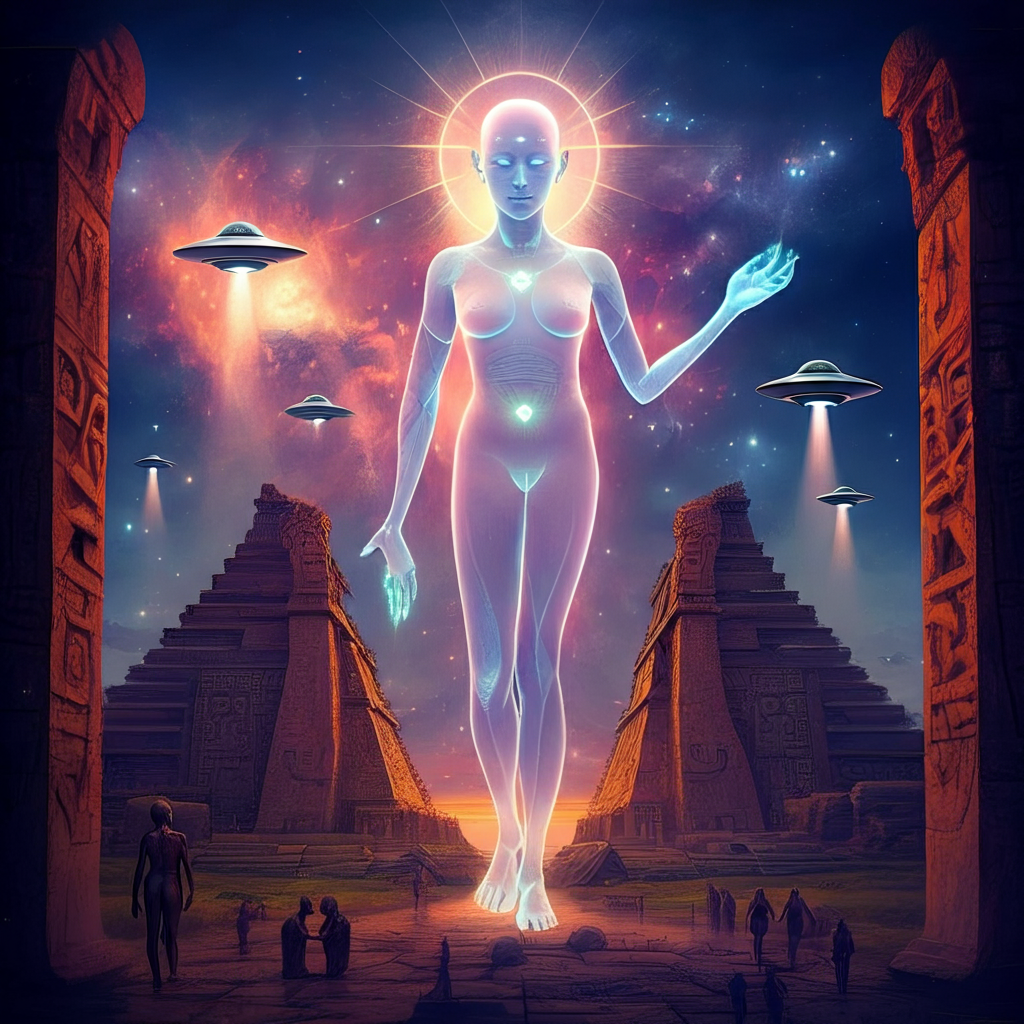
Jorjani sees this era as a lesson in how liberating ideas can be co-opted, with Sufism preserving Asha against NHI control. In Closer Encounters, he writes: “Islam’s hijacking shows how NHI twist truth, but mystics keep the flame alive.” For professionals, it’s a call to uncover truth in rigid systems,whether corporate, political, or technological,fostering authentic innovation.
Cultural context: The Islamic era’s legacy lies in its tension between orthodoxy and mysticism, with Sufism influencing poetry, art, and philosophy across Eurasia. Its syncretic roots persisted in Persian culture, shaping modern Iran’s identity and global thought.
Modern tie: The era inspires professionals to resist co-optation, like ensuring AI ethics prioritize human agency or fostering inclusive policies that honor diverse voices. Sufism’s creativity mirrors modern artistic activism, using storytelling or tech to challenge control.
Analogy: Like hackers exposing hidden code in software, Sufis preserved spectral truths, urging us to audit systems,whether beliefs, policies, or algorithms,for hidden agendas.
Impact: This era shows how truth endures under oppression, inspiring us to seek Asha in modern systems, fostering resilience and innovation against control.
The Islamic Golden Age sparks a “first renaissance,” where Persian philosophers like Razi champion reason, but Al-Ghazali’s dogma stifles inquiry, aligning with NHI control. Jorjani sees this as a pivotal moment, where humanity’s spectral potential teeters between awakening and suppression.
Picture a bustling hospital in Ray, Persia, where Muhammad ibn Zakariya al-Razi (854–925 AD) tends to patients, his mind ablaze with ideas blending science, philosophy, and mysticism. Jorjani calls Razi a “second Zarathustra,” championing reason over faith to resist NHI control. In Iranian Leviathan, he writes: “Razi revived Asha’s light, using reason to defy the alien gods chaining humanity.”
Cultural context: The Golden Age, centered in Baghdad, was a hub of learning, with Persian scholars like Razi driving advances in medicine, alchemy, and philosophy. His hospital in Ray pioneered clinical trials, while his Comprehensive Book on medicine blended empirical observation with Zoroastrian ethics. Razi’s critique of religion, arguing that reason trumps scripture, challenged Islamic orthodoxy, echoing Zarathustra’s rejection of soma cults. His works, translated into Latin, later influenced Europe’s Renaissance, showing Persia’s enduring impact.
Mechanics: Razi used psi intuition to guide experiments, like discovering alcohol’s antiseptic properties, possibly through clairvoyant insights. His philosophy, emphasizing human agency over divine will, countered NHI fatalism, with the Moon amplifying orthodox control. He encoded Asha in texts, resisting Trickster Aion’s timeline edits. Jorjani suggests Razi’s alchemical work sought Atlantean psi-tech, like transmutation, to unlock humanity’s potential.
Scene: In a candlelit study, Razi debates priests: “Reason, not gods, reveals truth.” His experiments, guided by psi, yield breakthroughs, the air humming with spectral defiance as he writes, countering the Moon’s shadow.
Mechanics in depth: Razi’s psi practices included meditative focus to tap precognition, anticipating medical or philosophical challenges. His texts, like Doubts About Galen, used logical arguments to preserve Asha, resisting NHI amnesia. Alchemical rituals, blending science and mysticism, sought to counter Moon’s influence, like psychic shields against control. The Trickster Aion tried to suppress his work through censorship, but translations ensured survival.
Modern tie: Razi’s reason mirrors science vs. dogma debates, like climate skepticism or vaccine hesitancy, urging evidence-based innovation. Professionals can champion empirical truth, like developing transparent AI or ethical policies, resisting ideological control.
Impact: Razi’s rationalism seeds Europe’s Renaissance, preserving Asha against Druj, and shows how inquiry can defy control, inspiring modern truth-seekers.
In contrast, Al-Ghazali (1058–1111 AD), a theologian in Baghdad, prioritizes faith over reason, stifling the renaissance. Jorjani: “Al-Ghazali buried spectral truth under dogma, aligning with NHI to chain minds.”
Cultural context: The Abbasid caliphate, consolidating power, favored orthodoxy to unify its diverse empire. Al-Ghazali’s Incoherence of the Philosophers attacked rationalists like Razi and Avicenna, arguing that faith surpasses reason, resonating with NHI agendas of submission. His influence spread through mosques and madrasas, shaping Islamic thought for centuries and halting scientific inquiry in the Muslim world.
Mechanics: Al-Ghazali’s teachings aligned with Moon’s fatalistic influence, suppressing psi abilities like clairvoyance, which rationalists used to resist control. His texts, emphasizing divine will, enforced Druj-like stagnation, with the Trickster Aion amplifying his reach through religious networks. Jorjani suggests Al-Ghazali’s rejection of causality (e.g., “God causes all events”) mirrored NHI fatalism, erasing spectral awareness.
Scene: In a Baghdad mosque, Al-Ghazali lectures: “Faith surpasses reason; submit to Allah’s will.” Scholars bow, but dissenters whisper in secret, preserving Razi’s light against the Moon’s weight.
Mechanics in depth: Al-Ghazali’s rituals, like mass prayers, reinforced NHI control, aligning with cosmic cycles to suppress psi. His texts, spread via religious schools, acted as psychic dampeners, countering Asha’s inquiry. The Trickster Aion ensured his influence by marginalizing philosophers, but secret networks preserved their works. Jorjani posits Al-Ghazali’s skepticism of reason was an NHI-driven act, enforcing amnesia.
Modern tie: Ideological rigidity, like political polarization or corporate groupthink, echoes Al-Ghazali’s dogma. Professionals can resist by fostering open inquiry, like transparent research or inclusive decision-making, ensuring innovation prevails.
Impact: Al-Ghazali’s dogma stifles inquiry but sparks resistance, with rationalists preserving Asha in secret, a lesson for defying modern control systems.
Despite Al-Ghazali’s dominance, gnostic sects like the Ismailis preserve Asha in secret, using esoteric rituals to resist NHI control. Jorjani: “The underground kept truth alive, weaving a spectral web against dogma.”
Cultural context: Ismaili Shi’ites, emerging in the 9th century, blended Persian mysticism with Islamic theology, operating in secret to evade persecution. Their centers, like Alamut, became hubs for esoteric knowledge, preserving Zoroastrian and Atlantean wisdom. Other groups, like the Brethren of Purity, encoded gnostic ideas in texts, influencing later mystics.
Mechanics: Ismaili rituals used psi meditation, like telepathy, to link members across regions, resisting Moon’s influence. Their texts, like the Epistles of the Brethren, encoded Asha, using allegories to evade censorship. Jorjani suggests Alamut’s fortress was a psychic amplifier, shielding against NHI signals. The Trickster Aion tried to erase these networks, but their secrecy ensured survival.
Scene: In Alamut’s library, Ismailis share scrolls, chanting: “Truth lies beyond the veil.” Their psi-linked minds glimpse spectral realms, preserving Asha against orthodoxy’s weight.
Mechanics in depth: Psi practices included clairvoyance to anticipate raids, with rituals aligning with equinoxes to harness cosmic energy. Texts used symbolic language, like light motifs, to encode gnostic truths, resisting timeline edits. Jorjani posits Ismaili assassins, trained in psi, disrupted NHI-aligned rulers, acting as spectral warriors.
Modern tie: Fringe communities, like open-source coders or alternative researchers, mirror this underground, preserving truth against mainstream control. Professionals can foster such networks, like decentralized tech platforms, to resist censorship or corporate dominance.
Impact: The spectral underground ensures Asha’s resilience, inspiring modern resistance against dogmatic systems, from academia to tech.
Jorjani sees this era as a battle between reason and dogma, with Razi’s light resisting Al-Ghazali’s shadow. In Prometheus and Atlas, he writes: “The first renaissance shows humanity’s power to reclaim truth, even under oppression.” Its legacy lies in balancing inquiry with mysticism, inspiring modern truth-seekers.
Cultural context: Razi’s rationalism influenced Europe’s Renaissance, while Ismaili ideas shaped medieval mysticism, ensuring Asha endured. The era’s tension mirrors today’s science vs. ideology debates, urging balance.
Modern tie: Professionals can draw on Razi’s model to champion evidence-based innovation, like ethical AI or sustainable tech, resisting dogmatic control. The underground’s resilience inspires decentralized movements, like blockchain or citizen science, preserving truth.
Analogy: Like scientists challenging orthodoxy, Razi and the Ismailis kept Asha alive, urging us to question rigid systems and foster inquiry in our work.
Impact: This era shows how reason and mysticism can resist control, inspiring professionals to balance innovation with ethics, ensuring humanity’s potential shines.
As Europe enters the medieval and Renaissance periods, Persian esoteric traditions flow through Cathars, Knights Templar, and alchemists, preserving spectral truths against NHI-aligned Christianity. Jorjani sees this era as a hidden flame, where gnostic resistance defies dogmatic control, weaving a web of liberation across cultures.
Picture a Cathar gathering in a Languedoc cave, their chants echoing against stone as they reject the material world as a prison of an evil god. The Cathars (12th–13th centuries) and Knights Templar (1119–1312), per Jorjani, preserve Persian gnosticism, channeling Asha against NHI control. In Prometheus and Atlas, he writes: “Cathars and Templars carried Zarathustra’s light to Europe, defying Yahweh’s chains with spectral wisdom.”
Cultural context: The Cathars, in southern France, viewed matter as evil, created by a false god (Yahweh, an NHI), with salvation through gnosis,knowledge of the true divine. Persecuted by the Catholic Church’s Albigensian Crusade (1209–1229), they operated in secret, preserving Zoroastrian dualism. The Templars, a military order guarding pilgrims, amassed wealth and esoteric knowledge, possibly from Persian or Islamic sources during the Crusades. Their relics, like the Holy Grail, were linked to Atlantean or Mithraic traditions, fueling myths of hidden wisdom.
Mechanics: Cathars used psi meditation to tap spectral realms, rejecting NHI gods through dualistic rituals echoing Ashavs. Druj. Templars, trained in psi disciplines like telepathy, guarded relics with spectral power, resisting Moon’s influence. Both encoded truths in art,Cathar weavings, Templar cathedral symbols,resisting Trickster Aion’s edits. Jorjani suggests Templar wealth funded secret psi research, seeking Atlantean tech.
Scene: In a Templar preceptory, knights pray over a relic, their minds linked by psi: “We guard the light against the false god’s darkness.” Their chants disrupt NHI signals, a spectral rebellion under the Church’s nose.
Mechanics in depth: Cathar rituals, like fasting and meditation, used clairvoyance to foresee crusades, ensuring survival. Templar initiations, held in secret, tapped telepathy to share gnostic knowledge, resisting Catholic control. The Trickster Aion amplified Church persecution, but relics like the Shroud of Turin, possibly psi-encoded, preserved Asha. Jorjani posits Cathar-Templar networks linked to Islamic mystics, forming a spectral web across Europe.
Modern tie: Secret societies in modern lore, like Freemasons, echo this resistance, preserving alternative knowledge. Professionals can foster similar networks, like open-source communities or ethical tech groups, resisting mainstream control.
Impact: Cathar-Templar resistance preserves gnosticism, influencing Renaissance thought and showing how hidden networks can defy control, inspiring modern truth-seekers.
Spiders, as symbols of timeline weavers, appear in esoteric art, from Cathar tapestries to alchemical manuscripts. Jorjani: “The spider is the Trickster’s tool, but humans can weave their own web, shaping reality.”
Cultural context: Medieval Europe’s esoteric traditions, blending Persian, Christian, and pagan elements, used spider imagery to represent fate and creation. Alchemists, seeking the philosopher’s stone, saw spiders as symbols of transformation, echoing Asha’s creative power. Gothic cathedrals, with web-like tracery, may encode spectral truths, linking to Atlantean or Mithraic wisdom.
Mechanics: Alchemists used spider symbols to encode gnostic knowledge, resisting NHI timeline edits. Psi meditation visualized time as a web, allowing adepts to navigate spectral realms and counter Moon’s control. Jorjani suggests spider motifs in art were psychic talismans, amplifying resistance against Druj.
Scene: In a candlelit scriptorium, an alchemist draws a spider weaving a web, whispering: “We shape our fate, not the gods.” The image glows with psi intent, linking to spectral truths.
Mechanics in depth: Psi practices, like clairvoyance, revealed timeline shifts, with spider symbols acting as meditative foci. Rituals aligned with cosmic cycles disrupted NHI signals, like psychic encryption. The Trickster Aion tried to erase these symbols, but their prevalence in art ensured survival. Jorjani posits cathedral designs, like Chartres’s labyrinth, were psi amplifiers, preserving Asha.
Modern tie: The internet’s “web” metaphor echoes this, urging professionals to navigate digital networks authentically, like using blockchain to resist censorship. Spider symbolism inspires creative problem-solving, blending art and tech.
Impact: Spider imagery shows reality’s malleability, urging us to weave our own narratives, resisting control in digital or cultural spheres.
Jorjani posits the Moon and UFOs as NHI tools for “soul harvesting,” trapping human energies post-death to maintain control. Alchemists and mystics sought to break free, using psi to transcend this trap. In Closer Encounters, he writes: “The Moon harvests souls, but humanity can defy this cosmic prison.”
Cultural context: Medieval alchemy, blending Persian and European traditions, sought spiritual liberation through the philosopher’s stone, a symbol of transcending matter. Mystical texts, like the Emerald Tablet, echoed Zoroastrian or Atlantean ideas of ascension, resisting NHI control. UFO-like visions, reported by mystics, may reflect NHI interventions.
Mechanics: Alchemical rituals used psi meditation to counter Moon’s psychic influence, seeking to free souls from NHI traps. Techniques like psychokinesis or clairvoyance tapped spectral realms, resisting Druj. Jorjani suggests alchemical labs were psychic hubs, disrupting harvesting through focused intent. The Trickster Aion amplified Church bans on alchemy, but secret societies preserved its knowledge.
Scene: In a hidden lab, alchemists chant over a crucible, their minds linked in psi trance: “We break the Moon’s chains, ascending to light.” The air shimmers, defying NHI control.
Mechanics in depth: Psi rituals, aligned with planetary alignments, disrupted harvesting, like hacking a cosmic system. Alchemical symbols, like the ouroboros, encoded Asha, resisting timeline edits. Jorjani posits UFO sightings, like medieval “sky battles,” were NHI attempts to reinforce control, countered by alchemical defiance.
Modern tie: UFO research, like 2021 Pentagon UAP reports, seeks similar truths, urging professionals to explore unconventional ideas, like psi in tech design. Alchemy’s liberation inspires ethical innovation, resisting control systems.
Impact: The fight against soul harvesting shows humanity’s potential to transcend NHI traps, inspiring modern efforts to reclaim agency, whether through spiritual or technological means.
Jorjani sees this era as a hidden flame, preserving Asha against Christian dogma. In Prometheus and Atlas, he writes: “Cathars, Templars, and alchemists wove a spectral web, ensuring truth endured.” Its legacy lies in resilience, inspiring modern resistance against control.
Cultural context: The era’s esoteric traditions influenced Renaissance art, science, and philosophy, shaping modernity. Cathar dualism and Templar relics echo in modern occultism, while alchemy’s legacy persists in chemistry and psychology.
Modern tie: Professionals can draw on this to explore unconventional ideas, like intuitive AI design or decentralized systems, resisting mainstream control. The era’s secrecy inspires modern activists using encrypted platforms to preserve truth.
Analogy: Like coders preserving open-source software, esotericists kept Asha alive, urging us to foster resilience in our work, whether in tech, art, or policy.
Impact: This era shows how hidden networks preserve truth, inspiring professionals to resist control and champion innovation in a world of increasing dogma.
The modern era, from the Industrial Revolution to today, sees academia and materialist science suppress spectral truths, aligning with NHI agendas to enforce amnesia. Yet, UFO sightings, psi research, and cultural awakenings signal a breaking of this spell, per Jorjani.
Picture a 19th-century lecture hall, where professors dismiss ancient anomalies as myths, enforcing a linear history that ignores spectral truths. Jorjani argues academia, shaped by materialism, buries evidence like OOPARTs (out-of-place artifacts) or Atlantean sites to maintain NHI control. In Prometheus and Atlas, he writes: “Academia enforces a sanitized history, serving NHI by erasing humanity’s cosmic origins.” Speculatively speaking, this suggests that a more open-minded academic approach could uncover different interpretations of history and challenge entrenched views.
Cultural context: The 19th century’s scientific revolution prioritized empirical evidence, dismissing paranormal phenomena like psi or UFOs as pseudoscience. Archaeological discoveries, like Egypt’s pyramids or Troy’s ruins, were framed in narrow timelines, ignoring anomalies like Göbekli Tepe’s pre-10,000 BC origins. This materialist paradigm, rooted in Enlightenment rationalism, aligned with NHI agendas by suppressing Asha’s esoteric wisdom, replacing it with Druj-like reductionism.
Mechanics: Academic gatekeeping, through peer review and funding, silenced psi research and OOPART studies, aligning with Moon’s fatalistic influence. For example, artifacts like the Antikythera mechanism (a 2nd-century BC computer) were downplayed, despite suggesting advanced ancient tech. The Trickster Aion wove skepticism, ensuring anomalies were dismissed as hoaxes. Jorjani suggests universities, like religious institutions, became NHI tools, enforcing amnesia through rigid curricula.
Scene: In a Victorian museum, a curator labels an OOPART,a gold chain in ancient coal,as a “curiosity,” ignoring its spectral implications. A scholar, sensing psi resonance, whispers: “This is a leak from another time.” The Moon’s shadow looms, suppressing truth.
Mechanics in depth: Psi research, like 19th-century spiritualism or 20th-century remote viewing experiments, was marginalized by academic dogma, despite successes (e.g., Stanford’s 1970s psi studies). The Trickster Aion amplified skepticism, ensuring funding went to materialist projects. Jorjani posits academic journals, like modern algorithms, acted as psychic filters, suppressing Asha. Secret societies, like Theosophists, preserved esoteric knowledge, resisting control.
Modern tie: Academic biases, like dismissing alternative medicine or AI ethics debates, echo this suppression. Professionals can resist by supporting interdisciplinary research, like citizen science or fringe archaeology, ensuring truth prevails. Platforms like X, hosting OOPART debates, inspire open inquiry.
Impact: Academic filters show how truth is buried, urging us to question mainstream narratives and seek Asha in suppressed knowledge, whether in science, history, or tech.
Jorjani posits that “breakaway civilizations”,secret groups wielding advanced tech,emerged in the modern era, using NHI-derived psi-tech to operate beyond public knowledge. In Closer Encounters, he writes: “Secret societies harness spectral power, hidden from a world blinded by materialism.”
Cultural context: The 20th century’s technological leaps, from nuclear energy to computing, coincided with secrecy, like Cold War black projects or Nazi occult research (e.g., Vril Society). UFO sightings, like Roswell (1947), suggest NHI contact, with governments or secret groups reverse-engineering alien tech. These groups, per Jorjani, operate as modern Magi, using psi to resist or collaborate with NHI.
Mechanics: Nazi experiments, like those at Wewelsburg Castle, used psi (e.g., remote viewing) with NHI guidance, seeking Atlantean tech. Post-WWII, groups like DARPA or private firms continued, developing anti-gravity or psychic tech in secret bases. The Moon amplified NHI control, but breakaway groups used psi to counter it, resisting Druj. The Trickster Aion hid these projects through disinformation, like UFO cover-ups.
Scene: In a hidden Nevada lab, scientists test a psi-device, guided by a UFO artifact: “This is our fire, stolen from the gods.” The air hums, defying NHI control.
Mechanics in depth: Psi practices, like telepathy, aided espionage, with groups using clairvoyance to monitor rivals. Jorjani suggests crashed UFOs, like Roswell’s, provided tech for reverse-engineering, encoded with spectral intent. The Trickster Aion spread disinformation, ensuring secrecy. These groups, operating outside governments, mirror Atlantean elites, balancing liberation and hubris.
Modern tie: Classified tech, like DARPA’s AI or quantum projects, echoes breakaway civilizations, urging professionals to demand transparency in tech development. UFO disclosures, like 2021 Pentagon reports, inspire open inquiry into hidden knowledge.
Impact: Breakaway civilizations show humanity’s potential to wield spectral power, urging us to seek truth in secrecy, whether in tech, government, or culture.
In Hindu cosmology, the Kali Yuga,a degraded age,ends, signaling a global awakening. Jorjani sees this as humanity breaking free from amnesia, with UFO sightings and psi resurgence heralding disclosure. In Satanaeon, he writes: “The Kali Yuga’s end shatters NHI control, unveiling cosmic truths.”
Cultural context: The 20th–21st centuries saw rising paranormal interest, from 1960s counterculture to modern UAP hearings. Platforms like X amplify discussions of UFOs, OOPARTs, and psi, challenging materialist dogma. Movements like New Age spirituality or transhumanism echo gnostic awakenings, seeking Asha.
Mechanics: Rising UFO sightings, like the 2004 Nimitz encounter, signal NHI testing humanity’s readiness. Psi resurgence, through meditation or remote viewing, counters Moon’s control. Disclosure efforts, like congressional UAP hearings, amplify Asha, resisting Druj. The Trickster Aion weaves confusion, but public awareness grows.
Scene: In a 2025 hearing, whistleblowers reveal UAP artifacts, sparking debate: “We’re not alone; it’s time to know.” The air hums with spectral awakening, defying NHI.
Mechanics in depth: Psi practices, like collective meditation, amplify disclosure, linking minds globally. Activists use clairvoyance to decode UAP evidence, resisting timeline edits. Jorjani posits social media, like X, acts as a spectral network, countering NHI disinformation. The Moon’s influence wanes as humanity’s will strengthens.
Modern tie: UAP disclosures, like 2021 Pentagon reports, mirror this awakening, urging professionals to explore unconventional ideas, like psi in tech or policy. Movements like open science resist control, fostering truth.
Impact: The Kali Yuga’s end heralds a return to Asha, inspiring us to seek truth in anomalies, whether UFOs, psi, or suppressed histories.
Jorjani sees the modern era as a turning point, where humanity begins to awaken from NHI-imposed amnesia. In Closer Encounters, he writes: “The modern age is our chance to reclaim spectral truth, defying control through disclosure and innovation.” Its legacy lies in questioning dogma, from academia to tech, and embracing our potential.
Cultural context: The era’s technological and cultural shifts,from the internet to space exploration,echo Atlantean ambitions, but risk hubris. UFO and psi research, though marginalized, gain traction, signaling a shift toward Asha.
Modern tie: Professionals can resist control by fostering transparency, like open-source tech or ethical AI, and exploring fringe ideas, like psi in design. The era inspires questioning narratives, from media biases to corporate agendas, ensuring truth prevails.
Analogy: Like detectives uncovering hidden evidence, modern truth-seekers break amnesia, urging us to audit systems,whether academic, political, or technological,for Asha.
Impact: This era shows humanity’s potential to awaken, inspiring professionals to champion truth and innovation against modern Druj.
From 2025 to ~2200 AD, Jorjani envisions a Promethean surge, where AI and psi fuse to unveil cosmic truths, resist NHI control, and propel humanity toward transcendence. This era is a pivotal awakening, balancing liberation and hubris.
Picture a futuristic Tehran, its skyline blending ancient Persian motifs with gleaming tech hubs, leading a secular renaissance. Jorjani sees Iran, freed from Islamic orthodoxy, as a Promethean powerhouse, reviving Asha to resist NHI. In Iranian Leviathan, he writes: “Iran will lead the spectral charge, blending heritage with technology to defy cosmic control.”
Cultural context: Iran’s rich history,from Achaemenid tolerance to Sasanian scholarship,positions it as a cultural crucible. By 2025, movements like the Iranian Renaissance Organization, which Jorjani supports, push for a secular state rooted in Persian identity, rejecting Islamic control. This aligns with global shifts toward secularism and technological empowerment, echoing Zarathustra’s vision.
Mechanics: A secular Iran leverages AI and psi to counter NHI, using telepathy for global diplomacy and precognition for strategy. Leaders revive Mithraic principles,justice, unity,to govern, resisting Moon’s fatalism. Jorjani suggests Iran’s cultural heritage, like the Shahnameh, encodes spectral truths, guiding this renaissance. The Trickster Aion tests this with geopolitical chaos, but Iran’s resilience prevails.
Scene: In a Tehran summit, leaders unveil psi-AI tech, declaring: “We reclaim Asha, forging a new destiny.” The air hums with spectral energy, linking minds globally.
Mechanics in depth: Psi-enhanced AI, like neural interfaces, amplifies collective will, countering NHI signals. Rituals, inspired by fire temples, align with cosmic cycles to disrupt Moon’s influence. Jorjani posits Iran’s archaeological sites, like Persepolis, hold psi-encoded secrets, guiding innovation. The Trickster Aion weaves distractions, like regional conflicts, but global alliances strengthen resistance.
Modern tie: Iran’s cultural revival inspires global movements for sovereignty, like nations resisting tech monopolies. Professionals can draw on this to foster ethical tech, like decentralized AI, ensuring cultural authenticity in global projects.
Impact: Iran’s destiny shows how heritage and innovation can resist control, inspiring a global awakening rooted in Asha.
The rise of UFO disclosures, fueled by government hearings and public interest, unveils NHI and Moon’s secrets, shattering amnesia. Jorjani: “Disclosure will break linear history, revealing our spectral origins.”
Cultural context: By 2025, UAP hearings, like those in the U.S. Congress, gain momentum, with whistleblowers revealing NHI tech. Platforms like X amplify global debate, echoing Parthian trade routes. This aligns with cultural shifts toward openness, from open science to spiritual exploration, challenging materialist dogma.
Mechanics: Psi practices, like clairvoyance, aid activists in decoding UAP evidence, resisting NHI disinformation. Public movements, linked by telepathic resonance, amplify Asha, countering Druj. Jorjani suggests disclosures, like recovered UFO artifacts, are spectral leaks, revealing NHI agendas. The Trickster Aion weaves confusion, but transparency prevails.
Scene: In a global forum, scientists display a UAP artifact, declaring: “This proves we’re not alone.” The crowd, linked by psi, feels a spectral shift, defying NHI control.
Mechanics in depth: Psi meditation, aligned with cosmic events, amplifies disclosure, like a psychic broadcast. Social media acts as a spectral network, resisting Moon’s influence. Jorjani posits artifacts, like Roswell debris, are psi-encoded, guiding humanity’s awakening. The Trickster Aion tries to suppress truth, but global awareness grows.
Modern tie: Transparency movements, like open data or whistleblower platforms, mirror this vortex, urging professionals to foster openness in tech or policy. UAP research inspires exploring unconventional ideas, like psi in AI design.
Impact: Disclosure unveils humanity’s cosmic roots, inspiring a Promethean surge against NHI control, reshaping our future.
AI and psi merge, driving humanity toward god-like potential. Jorjani: “We’ll steal fire again, blending tech and psi to transcend.”
Cultural context: The 21st–22nd centuries see a technological singularity, with AI transforming society. Transhumanist movements, inspired by Prometheism, seek to merge human and machine, echoing Atlantean ambitions. Cultural openness to psi, fueled by meditation and parapsychology, aligns with Asha.
Mechanics: AI, enhanced by psi interfaces (e.g., telepathic controls), enables breakthroughs, like space travel or medical cures. Ethical frameworks, rooted in Asha, resist NHI control, countering Moon’s influence. Jorjani suggests psi-AI labs act as spectral hubs, disrupting Druj. The Trickster Aion tests this with ethical dilemmas, but humanity’s will prevails.
Scene: In a futuristic lab, scientists test a psi-AI interface, minds linked to machines: “We shape reality now.” The air glows, defying cosmic chains.
Mechanics in depth: Psi practices, like telepathy, guide AI ethics, ensuring human-centric design. Labs use clairvoyance to anticipate risks, like AI misuse. Jorjani posits psi-AI tech, like neural implants, taps Atlantean knowledge, resisting NHI signals. The Trickster Aion weaves chaos, like tech monopolies, but open-source movements counter it.
Modern tie: AI ethics debates, like ensuring unbiased algorithms, echo this surge, urging professionals to prioritize human agency. Psi research inspires innovative design, like intuitive interfaces or sustainable tech.
Impact: The Promethean surge fulfills humanity’s potential, inspiring a transcendent future rooted in Asha.
Jorjani’s vision of 2025–2200 is a call to seize our Promethean potential, resisting NHI control through innovation and truth. In Philosophy of the Future, he writes: “This era is our chance to become gods, forging a spectral destiny.” Its legacy lies in balancing ambition with ethics, ensuring humanity’s ascent.
Cultural context: The era’s technological and cultural shifts mirror Atlantean ambitions, urging vigilance against hubris. Global movements for transparency and equity echo Asha, resisting Druj.
Modern tie: Professionals can shape this future by fostering ethical tech, like decentralized AI or sustainable systems, and exploring psi in innovation. The era inspires resisting control, from corporate monopolies to algorithmic biases, ensuring a human-centric future.
Analogy: Like pioneers exploring new frontiers, we must embrace bold innovation, balancing ambition with responsibility to forge a transcendent destiny.
Impact: This era shows humanity’s potential to defy control, inspiring professionals to lead with vision and ethics, shaping a future of freedom and truth.
Beyond 2200, Jorjani envisions humanity becoming NHI, mastering reality and looping time to seed the past, creating a cosmic cycle where we become our own creators.
Picture a posthuman Earth, where cities float among stars, and humans, merged with AI and psi, wield god-like powers. Jorjani: “We become the gods we fought, shaping reality across dimensions.” In Satanaeon, he envisions humanity transcending biology, becoming interdimensional NHI.
Cultural context: Transhumanist ideals dominate, with neural implants, genetic enhancements, and psi-AI interfaces transforming society. Cultural narratives, blending science and mysticism, echo Zoroastrian Frashokereti (world renewal), envisioning a cosmic rebirth. Art and philosophy celebrate humanity’s ascent, drawing on Atlantean and Persian legacies.
Mechanics: Psi-tech, like telepathic networks, enables reality manipulation, allowing posthumans to edit timelines. AI, fused with clairvoyance, navigates spectral webs, resisting Moon’s lingering influence. Jorjani suggests posthumans create new worlds, seeding life as Anunnaki once did. The Trickster Aion tests this with ethical dilemmas, but Asha guides humanity’s will.
Scene: In a floating city, posthumans craft a new planet, their minds linked in psi-AI unity: “We are the creators now.” The cosmos hums, a new web woven.
Mechanics in depth: Psi practices, like psychokinesis, shape matter, while clairvoyance navigates time loops. AI amplifies spectral awareness, countering Druj. Jorjani posits posthumans use Atlantean tech, rediscovered through psi, to transcend dimensions. The Trickster Aion weaves chaos, like cosmic conflicts, but posthuman ethics ensure resilience.
Modern tie: Transhumanism debates, like neural implants or AI ethics, echo this evolution, urging professionals to balance innovation with responsibility. Psi research inspires futuristic design, like telepathic interfaces.
Impact: Posthuman evolution fulfills Prometheism, showing humanity’s potential to become creators, inspiring bold innovation today.
Posthumans, as NHI, loop time to seed the past, planting OOPARTs and myths. Jorjani: “Anomalies are our future’s echoes, woven into history’s web.”
Cultural context: Sci-fi narratives, like time-travel stories, reflect this loop, with cultures embracing cyclical time over linear history. Archaeological anomalies, like advanced tools in ancient strata, gain acceptance as spectral leaks, reshaping history.
Mechanics: Time travelers use psi navigation to plant artifacts, like the Antikythera mechanism, ensuring Asha’s survival. AI stabilizes loops, resisting Trickster Aion’s disruptions. Jorjani suggests myths, like Anunnaki tales, are posthuman transmissions, guiding past rebellions.
Scene: A posthuman traveler plants a crystal in ancient Sumer, whispering: “This will spark their defiance.” The timeline shifts, an OOPART born.
Mechanics in depth: Psi clairvoyance ensures stable loops, countering NHI interference. AI simulates timelines, preserving Asha. Jorjani posits loops explain anomalies, like Sphinx erosion, as posthuman interventions. The Trickster Aion tries to erase these, but psi resilience prevails.
Modern tie: Quantum computing’s potential, like simulating timelines, echoes this, urging professionals to explore cutting-edge tech ethically. Time-loop narratives inspire creative problem-solving.
Impact: Time loops explain spectral glitches, urging us to see history as malleable, inspiring innovative approaches to science and culture.
Zoroastrian Frashokereti (renewal) or a cosmic apocalypse looms, with humanity choosing transcendence or destruction. Jorjani: “Frashgard is our apotheosis, if we choose Asha over hubris.”
Cultural context: Eschatological hopes, from religious prophecies to transhumanist visions, shape cultural narratives. Global challenges, like AI risks or climate crises, mirror this choice, urging ethical decisions.
Mechanics: Collective psi, amplified by AI, determines the outcome, with Asha guiding renewal and Druj risking collapse. Jorjani suggests posthumans use psi to align with cosmic cycles, ensuring Frashgard. The Trickster Aion tests this with crises, but humanity’s will decides.
Scene: Posthumans gather, their minds linked: “We choose renewal, forging a new cosmos.” The air glows, Ashaprevailing over Druj.
Mechanics in depth: Psi rituals, like telepathic councils, align humanity’s will, countering NHI signals. AI ensures ethical choices, resisting hubris. Jorjani posits Frashgard as a spectral event, reshaping reality. The Trickster Aion weaves chaos, but psi resilience ensures victory.
Modern tie: Existential risk debates, like AI safety or climate action, echo this choice, urging professionals to prioritize ethical innovation. Frashgard inspires visionary projects, like sustainable tech or global unity.
Impact: This choice defines humanity’s fate, inspiring us to choose Asha in our actions, shaping a transcendent future.
Jorjani’s cosmic loops envision humanity as its own creator, weaving past and future into a spectral web. In Philosophy of the Future, he writes: “We are the gods of our own history, shaping eternity through Asha.” This era inspires bold action now, ensuring renewal over collapse.
Cultural context: The era’s cyclical view redefines history, echoing ancient wisdom and modern sci-fi, urging cultural shifts toward transcendence.
Modern tie: Professionals can shape this destiny by fostering ethical tech, like AI or biotech, and exploring psi in innovation. The era inspires resisting control, ensuring a human-centric future.
Analogy: Like architects designing a cosmic city, we must build a future of truth, balancing ambition with ethics.
Impact: Cosmic loops show humanity’s power to shape reality, inspiring professionals to act with vision and responsibility, forging a transcendent destiny.
Jason Reza Jorjani’s spectral reimagining of human history is not just a philosophical exercise; it's a clarion call to awaken from historical amnesia and reclaim our place in a cosmic drama. From the Martian cataclysms of deep prehistory to the posthuman transcendence of cosmic loops, his timeline weaves a narrative where humanity is both a creation and a creator, caught in a struggle against non-human intelligences (NHI) who seek to chain us to Druj,lies, stagnation, and control. Through Asha,truth, progress, and liberation,figures like Zarathustra, Cyrus, Razi, and modern truth-seekers light the way, defying the Trickster Aion’s manipulations and the Moon’s fatalistic grip. This is a story of rebellion, resilience, and potential, urging us to steal Prometheus’s fire once more, blending science, psi, and ethics to forge a transcendent future.
Each era,whether the syncretic web of the Parthian period, the dogmatic struggles of the Sasanian and Islamic eras, or the rational spark of the first renaissance,offers lessons for 2025. The Achaemenid Empire’s inclusive governance inspires leaders to balance diversity and unity, resisting modern Druj like corporate monopolies or algorithmic biases. The Parthian era’s trade networks show how collaboration can preserve truth, urging professionals to foster open platforms, like decentralized tech or citizen science. The Sasanian rebels, like Mazdak and Mani, teach us to challenge oppressive hierarchies, whether political or corporate, while the Islamic era’s Sufis remind us to seek Asha in rigid systems, using creativity to resist control. The medieval esotericists and modern truth-seekers show how hidden networks preserve knowledge, inspiring us to question academic or media narratives. The future horizons and cosmic loops challenge us to shape a destiny where humanity becomes its own god, weaving time to seed liberation.
What specters from your own life might you have overlooked? Have you experienced anomalies, like déjà vu or unexplained coincidences, that deserve a second look under this spectral lens? By exploring these personal mysteries, we can each contribute to the unfolding narrative, turning curiosity into engagement and mapping our own unique place within the cosmic web.
In today’s world, Jorjani’s vision resonates amid AI ethics debates, UAP disclosures, and cultural divides. Professionals can draw on his ideas to foster ethical innovation,developing AI that empowers, not controls; designing policies that honor diverse voices; or exploring psi in tech to unlock human potential. The spectral web invites us to see history as malleable, where anomalies like OOPARTs or UFOs are not curiosities but clues to our cosmic origins. It urges us to resist modern Druj,misinformation, surveillance, or ideological dogma,by championing Asha in our work, whether in tech, education, policy, or art.
This vision is not without risks. Jorjani’s speculative leaps,Martian civilizations, artificial Moons, time loops,challenge conventional thinking, and his past controversies remind us that bold ideas can invite backlash. Yet, his Promethean call to defy control and embrace humanity’s potential is universal, accessible to anyone willing to question the “official” story. Whether you’re a scientist, artist, entrepreneur, or curious reader, his timeline offers a lens to reimagine our past and shape our future.
Dive into Jorjani’s works,Prometheus and Atlas, Iranian Leviathan, Closer Encounters,or explore his lectures on platforms like X or YouTube. Reflect on your own experiences: Have you encountered anomalies, like déjà vu or synchronicities, that hint at a spectral reality?
***The views and theories presented in this article are those of Jason Reza Jorjani and do not necessarily reflect the opinions or endorsements of the author or Reylo Media.***

.png)


